- The situation
- More than 40 IT projects with no shared intake, no common status and no single view for leadership.
- What our person did
- Stood up the PMO – one intake process, a prioritized portfolio, standard status reporting and a weekly steering meeting.
- The result
- Every project in one portfolio within 90 days; status reporting went from days of chasing to under an hour.
Use cases and results
People who understand the work. Applications that improve it. AI agents that help perform it.
IT and technology roles we fill
Back to topFind the challenge closest to yours – then see the role we fill, what our people do and the applications and AI agents we build to automate the work. Click a blue example to see one we’ve built.
IT strategy and organization 6
IT is busy, but no one can say how the work ties to the business strategy.IT strategy and operating model
Define the IT strategy, operating model, decision rights and roadmap.
Roles overlap, gaps go unowned and the IT org chart no longer fits the work.Organizational design and restructuring
Restructure IT functions, roles and teams – or stand up a whole IT organization.
Every new tool gets bought or built on its own, and the landscape keeps getting messier.Enterprise architecture
Set architecture principles, review solutions and keep investments fitting your environment.
Architecture review portalTechnology standards catalogApplication portfolio mapTechnical-debt register
Architecture review agentStandards-compliance agentSolution-option evaluator
Business leaders feel IT doesn’t understand their priorities.Business relationship management
Work with business leaders, prioritize their needs and connect them to technology.
Plants and remote sites feel disconnected from corporate IT, and rollouts stall there.Site and business IT engagement
Visit sites and business units, gather needs, build consensus and coordinate local IT teams.
An acquisition just closed, and nobody knows what systems you inherited.M&A technology integration
Assess acquired environments and run integration, separation and standardization.
Portfolio, PMO and projects 7
Requests arrive by email, hallway and spreadsheet, and no one knows what’s been approved.Idea, demand and project management
Run the full idea-to-demand-to-project workflow – evaluation, approvals, prioritization and funding.
Idea-refinement agentDemand-scoring agentDuplicate-demand detectorBusiness-case agent
Everything is a priority, so the team is spread thin and nothing finishes.Portfolio management
Organize initiatives, weigh capacity and help leadership choose what to fund.
Nobody can say which projects are on track, and every status report takes days.IT PMO
Stand up or run your PMO – standards, intake, PM support, governance and reporting.
PM copilotStatus-summary agentMilestone-risk agentMeeting and action-item agent
A critical program is slipping, and there’s no one to own it end to end.Program and project management
Lead programs and projects end to end – scope, schedule, vendors and cutover.
Schedule-risk agentScope-change agentImplementation-readiness agent
Features get built, but nobody owns the roadmap or the outcomes.Product management
Own product strategy, roadmaps and backlogs tied to business outcomes.
Cloud and AI work is happening everywhere, with no single view of cost or value.Cloud and AI portfolio management
Organize cloud and AI demand, roadmaps and investments across teams.
Projects close, but no one can show they delivered the savings promised.Benefits and value realization
Track whether investments deliver the promised savings and results.
Value-realization agentKPI agentBenefits-risk agent
Governance, security and risk 6
Decisions get made in hallways, and the same issues keep coming back.IT governance
Set up forums, decision rights, policies and accountability across IT.
People are already using AI with company data, and there are no rules yet.AI governance
Set AI policies, ownership, risk tiers, reviews and lifecycle controls.
Every report shows a different number, and no one owns the data definitions.Data governance
Establish data ownership, definitions, quality rules and access controls.
Audit findings and security gaps are piling up faster than they get fixed.IT security
Lead security programs, controls and remediation – SOC 2, penetration testing and security maturity.
Audits are coming, and the evidence is scattered across inboxes and drives.Governance, risk and compliance
Manage risks, controls, audits and compliance remediation.
Policies are outdated or missing, and exceptions are handled case by case.Technology standards and policy
Define, publish and maintain technology standards and policies.
Policy authoring agentException-review agentStandards advisor
ServiceNow and service management 3
ServiceNow is expensive and powerful, but people work around it.ServiceNow and ITSM
Administer and improve ServiceNow – ITSM, SPM, CMDB, catalog, assets and integrations.
Nobody knows who owns each service or what “good” looks like.Service management
Define services, owners and service levels, and keep improving them.
The answers live in a few people’s heads, and the help desk keeps re-solving the same issues.Knowledge management
Create and govern knowledge articles, SOPs, runbooks and support content.
Process, change and AI adoption 5
Key processes aren’t written down, so every handoff breaks.Process management and documentation
Discover, document and standardize business and IT processes.
Process-documentation agentGap-analysis agentSOP agent
Everyone knows the work is inefficient, but no one has time to fix it.Continuous improvement
Find inefficiencies, redesign workflows and measure the savings.
Root-cause agentAutomation-opportunity agentBenefits-realization agent
Projects get rebuilt because the requirements were never clear.Business analysis and requirements
Turn business needs into clear requirements, use cases and acceptance criteria.
New tools launch, but people keep doing it the old way.Change management and adoption
Prepare people for change with communications, training and adoption plans.
People want to use AI but don’t know where to start – or what’s allowed.Training and AI enablement
Teach your people to use AI safely and well, and build it into daily work.
AI coachPrompt-building agentPolicy-aware usage agent
IT finance, vendors and contracts 4
IT spend surprises Finance every month, and savings are hard to prove.IT financial management
Run budgets, forecasts, accruals, chargebacks and savings reporting.
Variance-analysis agentBudget-narrative agentSavings-opportunity agent
Leadership asks “what’s the return?” and the answer is a guess.Business cases and ROI
Build the financial case for investments and capital requests.
ROI agentAssumptions-review agentScenario-analysis agent
Contracts auto-renew, licenses go unused and vendors set the terms.Vendor, contract and procurement management
Run RFPs, manage SOWs and contracts, track renewals and cut costs.
RFP builderContract repositoryRenewal calendarLicense and spend dashboard
Choosing a new platform takes months, and the decision still feels like a gamble.Technology sourcing
Define requirements, compare products and vendors, and support the buy decision.
Applications, data and modernization 4
The business needs a tool that doesn’t exist, and IT has no capacity to build it.Application development
Design and build business applications, integrations and workflows – in your environment.
Testing agentDocumentation agentEnhancement-intake agent
Critical work runs on spreadsheets and Access databases one person understands.Legacy and application modernization
Replace spreadsheets, Access databases and aging apps with supportable solutions.
Legacy-analysis agentData-migration agentDocumentation agent
Systems don’t talk to each other, and reports are stitched together by hand.Enterprise applications, BI and integrations
Lead ERP, Power BI, reporting, integration and data-migration projects.
You pay for more applications than anyone can list, and many do the same thing.Application portfolio management
Keep the application inventory, spot duplicates and plan modernization or retirement.
Infrastructure and operations 2
Aging infrastructure and cloud costs keep growing, with no clear plan.Infrastructure and cloud
Lead infrastructure, cloud, identity, network and resiliency programs.
Infrastructure portfolio dashboardCloud-consumption trackerTechnology-refresh roadmapSite-readiness app
Day-to-day issues and escalations eat the time meant for improvement.IT operations
Run regional and site IT operations, escalations and multi-site rollouts.
Don’t see your need? Tell us about it – if it’s part of IT, we can staff it, build for it or both.
Examples of roles we’ve filled
Typical engagements, described without client names – details are illustrative.
- The situation
- A distribution center had to close on a fixed date while dozens of customers and suppliers moved to a new EDI platform.
- What our person did
- Led one program across IT, operations and trading partners – the cutover plan, partner testing, risks and daily stand-ups.
- The result
- Closed on schedule with no missed customer orders, and every trading partner migrated.
- The situation
- More strategic initiatives than the organization could deliver, and no shared answer on what gets funded first.
- What our person did
- Facilitated prioritization with the CIO and VPs – a capacity model, a clear line on what is funded, and a monthly governance rhythm – and supported an operating-model assessment.
- The result
- One agreed priority list, and decisions that used to take weeks now made in a single meeting.
- The situation
- Business teams building their own apps and AI tools with no standards, review steps or clear ownership.
- What our person did
- Designed the governance model – a capability matrix, standards, review gates and roles from idea to production.
- The result
- Teams build faster inside agreed guardrails, and IT knows what is running and who owns it.
- The situation
- An AI team with far more ideas than capacity, and no common way to plan, track or report its work.
- What our person did
- Runs the team’s PMO – intake, sprint planning, release tracking and a monthly update to leadership.
- The result
- Predictable delivery, and leaders can see the status of every AI initiative in one place.
- The situation
- IT spend tracked in spreadsheets, renewals that surprised the team, and capital requests without a clear return.
- What our person did
- Built budget-to-actual tracking, a contract library with a renewal calendar, and ROI-backed capital requests.
- The result
- Seven figures in savings identified in the first year, and every renewal reviewed 90 days ahead.
- The situation
- Manual work everywhere, improvement ideas lost in email, and no way to show what changes were worth.
- What our person did
- Built a continuous improvement program – idea intake, process mapping, automation candidates and benefit tracking, led by a Lean Six Sigma Master Black Belt.
- The result
- Dozens of processes documented, with automation opportunities ranked by value.
- The situation
- An infrastructure team buried in requests, vendor tickets and site work, with engineers pulled off projects to coordinate.
- What our person did
- Owns intake, scheduling and vendor follow-up for the team, and keeps every request moving to the right engineer.
- The result
- Backlog cut in half within four months, and engineers back on project work.
- The situation
- Leaders couldn’t trust month-end IT spend numbers, and each report took days to assemble by hand.
- What our person did
- Built monthly spend-versus-budget reporting with accruals, drill-downs by team and vendor, and a single source of truth.
- The result
- Month-end reporting in hours instead of days, with numbers Finance signs off on.
- The situation
- Federal defense organizations needed acquisition process, policy and program management expertise.
- What our person did
- Provided PMO leadership, acquisition policy advice, and management of IT and application development programs.
- The result
- Eight years of continuous support, renewed year after year.
AI solutions and AI agents we’ve built
Back to topReal tools in use, plus example builds we’re ready to deliver – with guided tours, videos and how fast we built them.
Working days from kickoff to in use:
Days 1–8Discovery – requirements, architecture, data and access
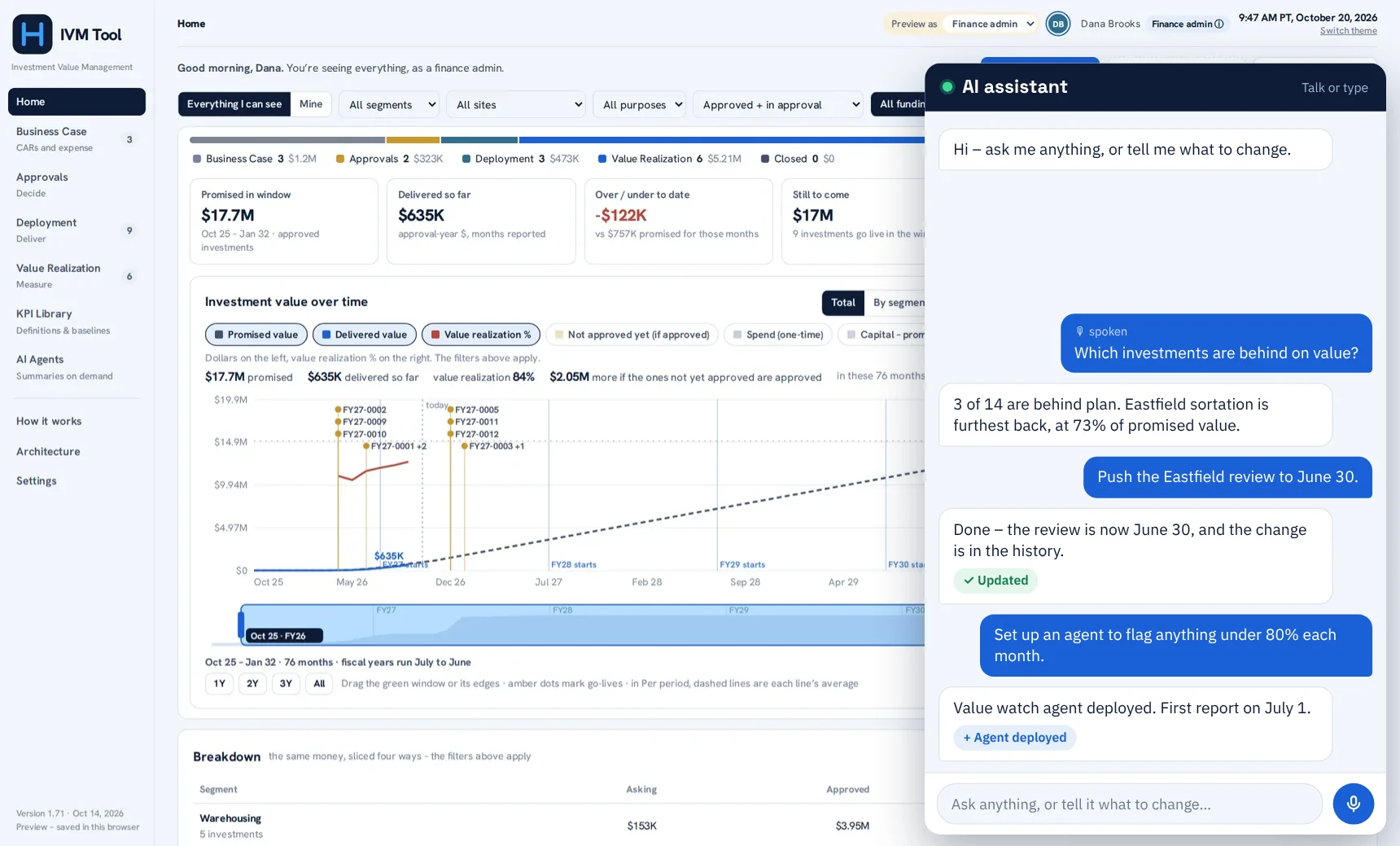
08101214161820Day 10Help desk triage agentDay 11Investment Value ManagementDay 12Process HubDay 13Finance & Savings TrackerDay 14Team Invoice TrackingDay 15Vendor risk reviewsDay 16Interactive Supply Chain LifecycleDay 18Project Management ToolDay 19Chargeback dispute agentBuilt and in use – click one to take its tourExample builds we’re ready to deliver – click one to see it
Days 1–8 are discovery, typical for a new client. After that, every build is refined with its users week by week. These are team tools – company-wide tools add a go/no-go gate and full IT hardening. See how timelines scale
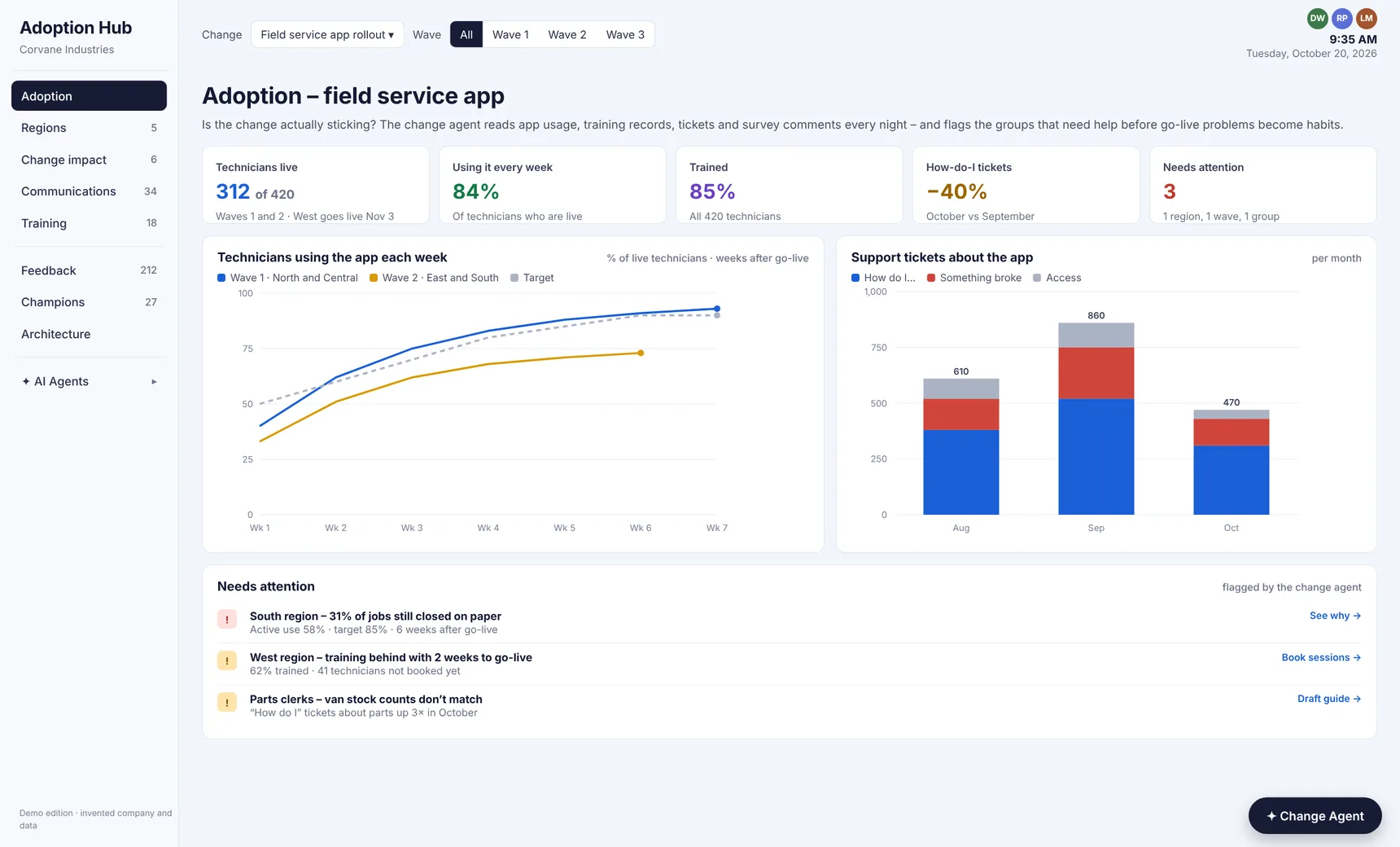
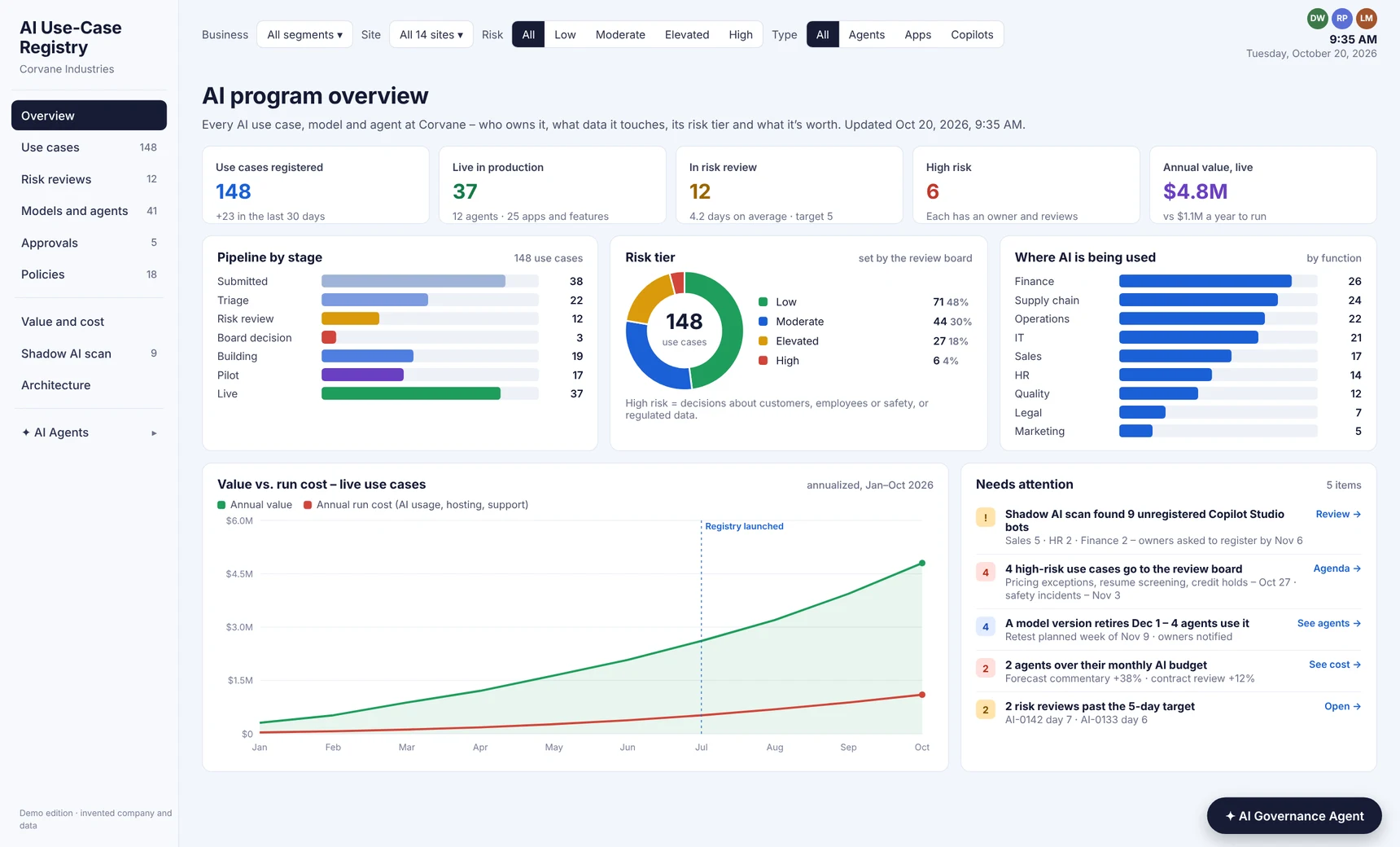
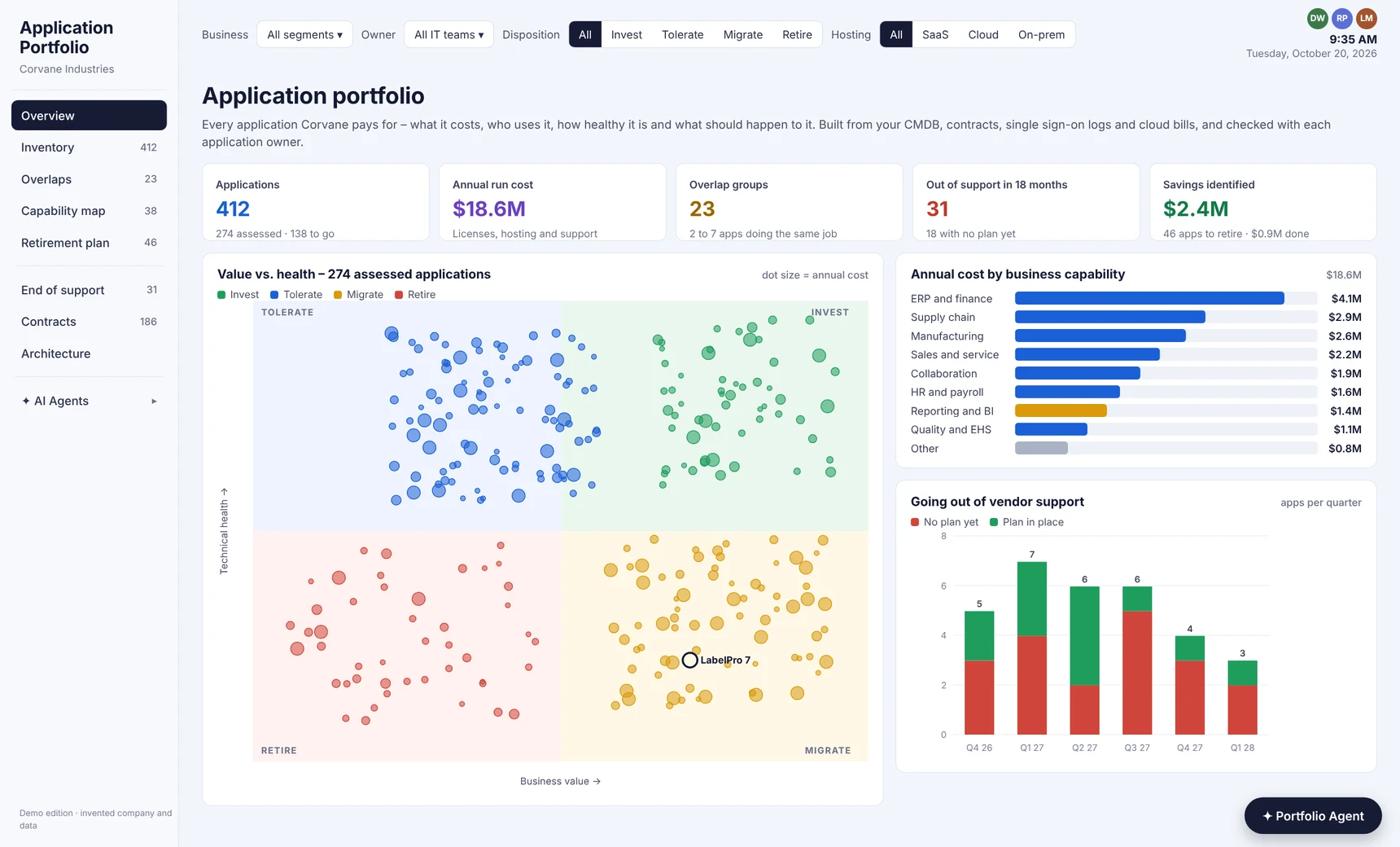
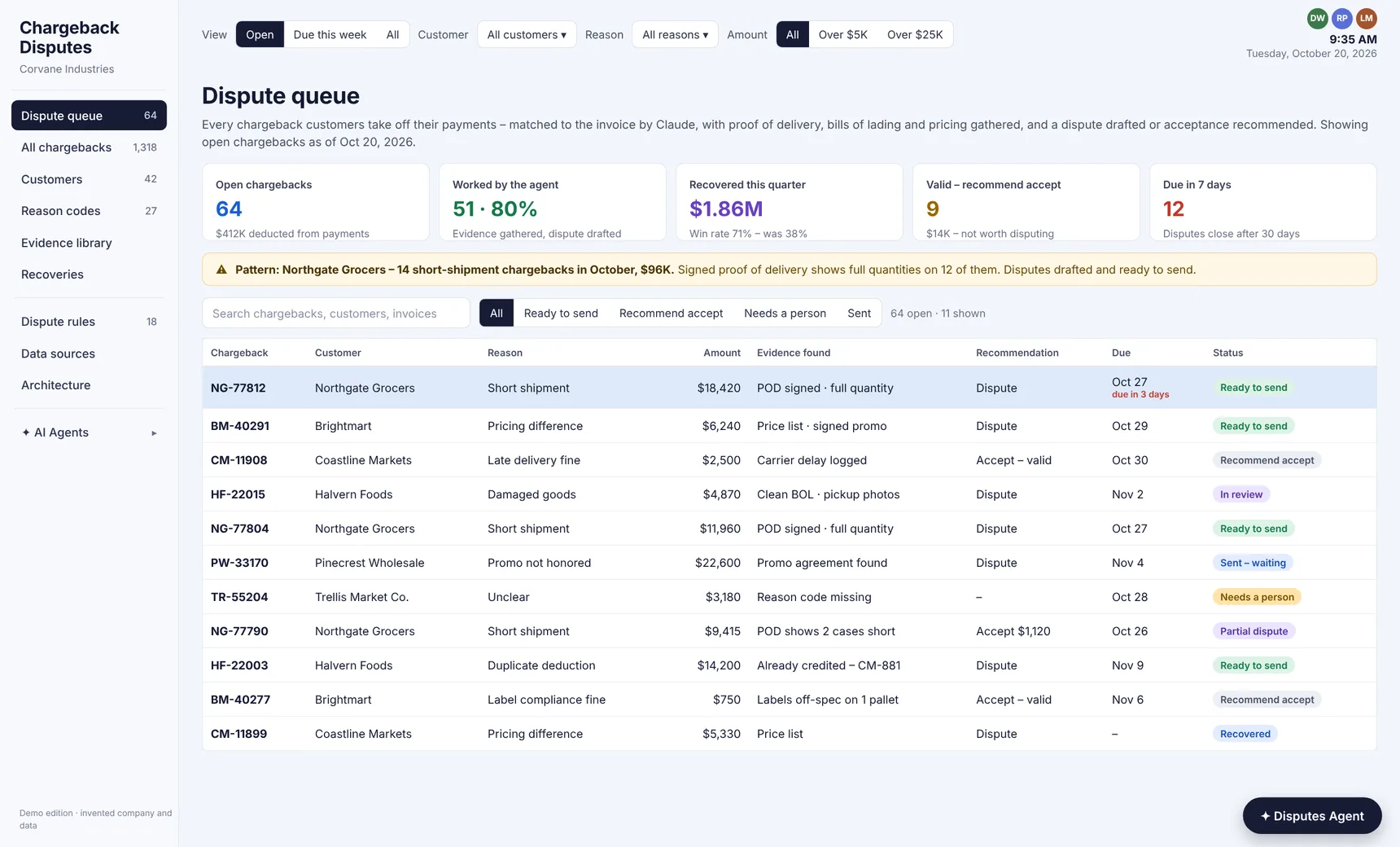
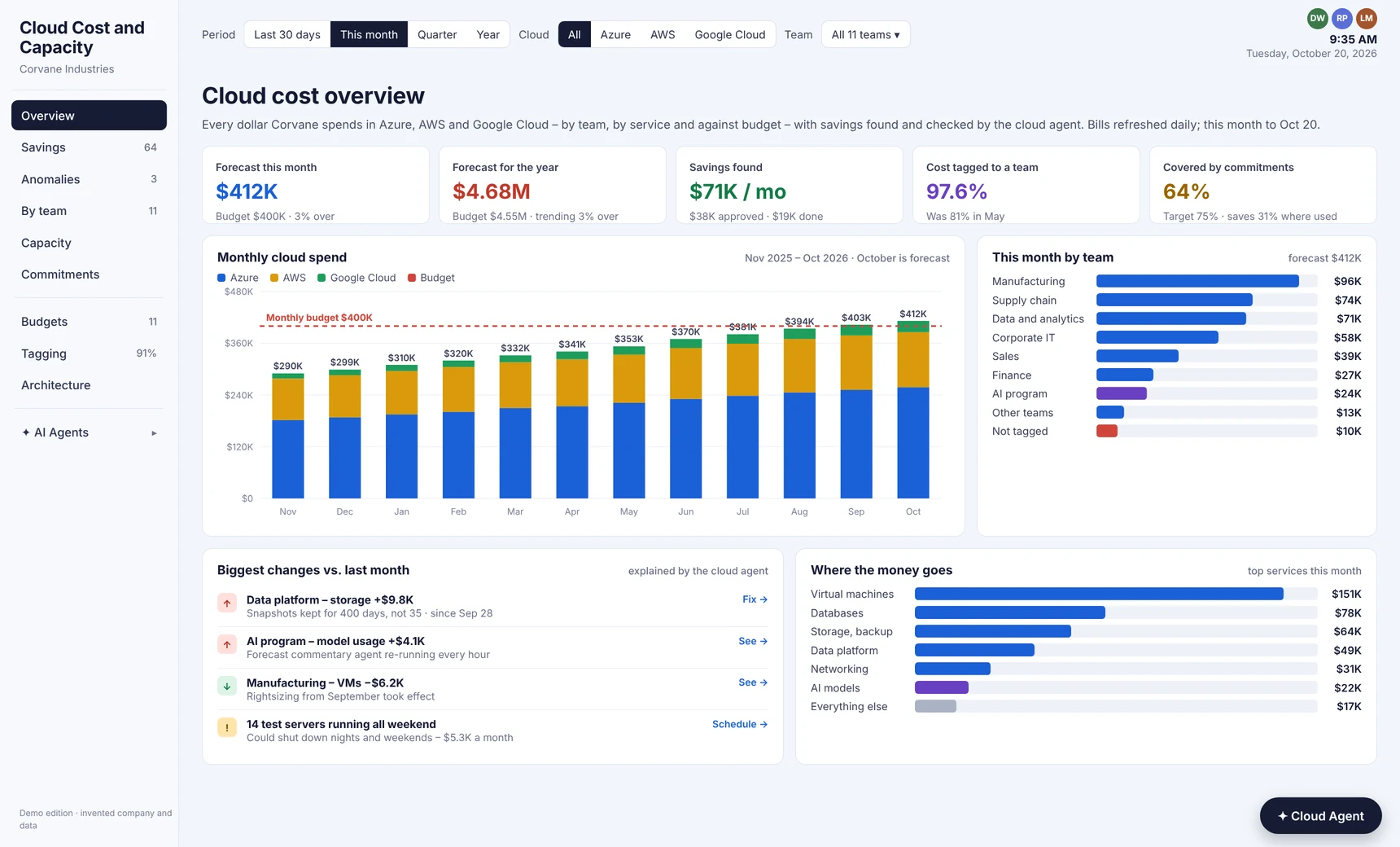
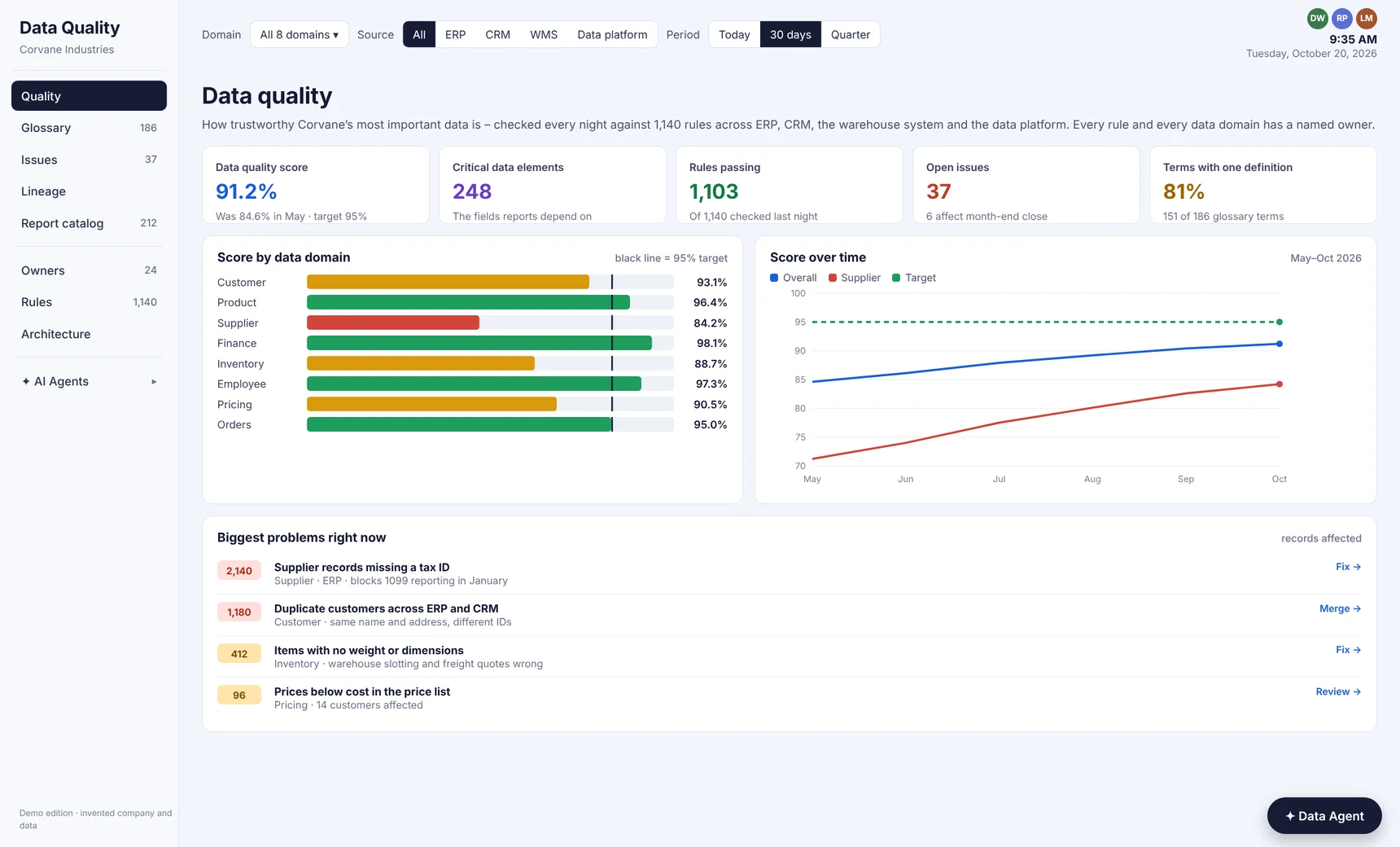
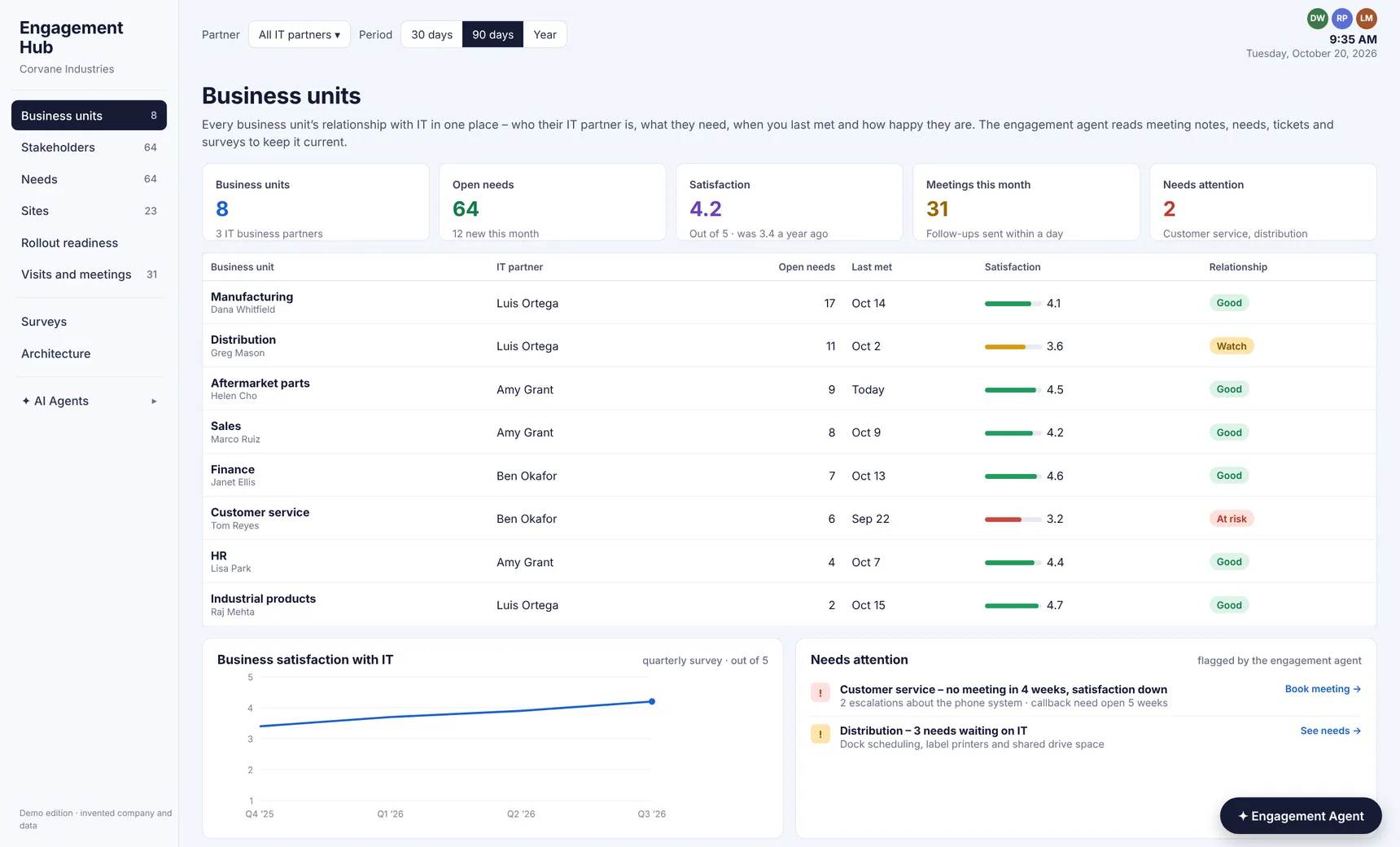
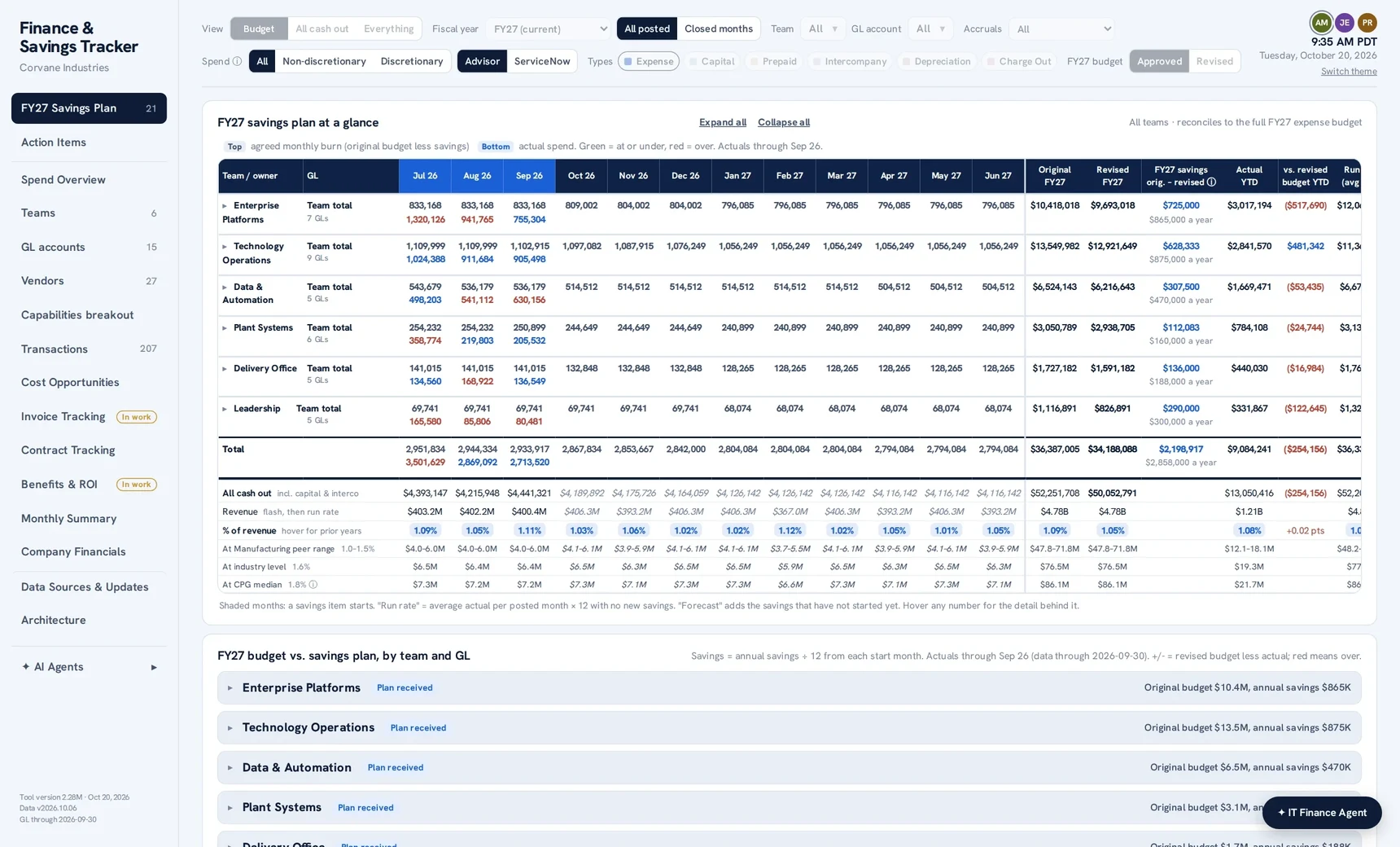
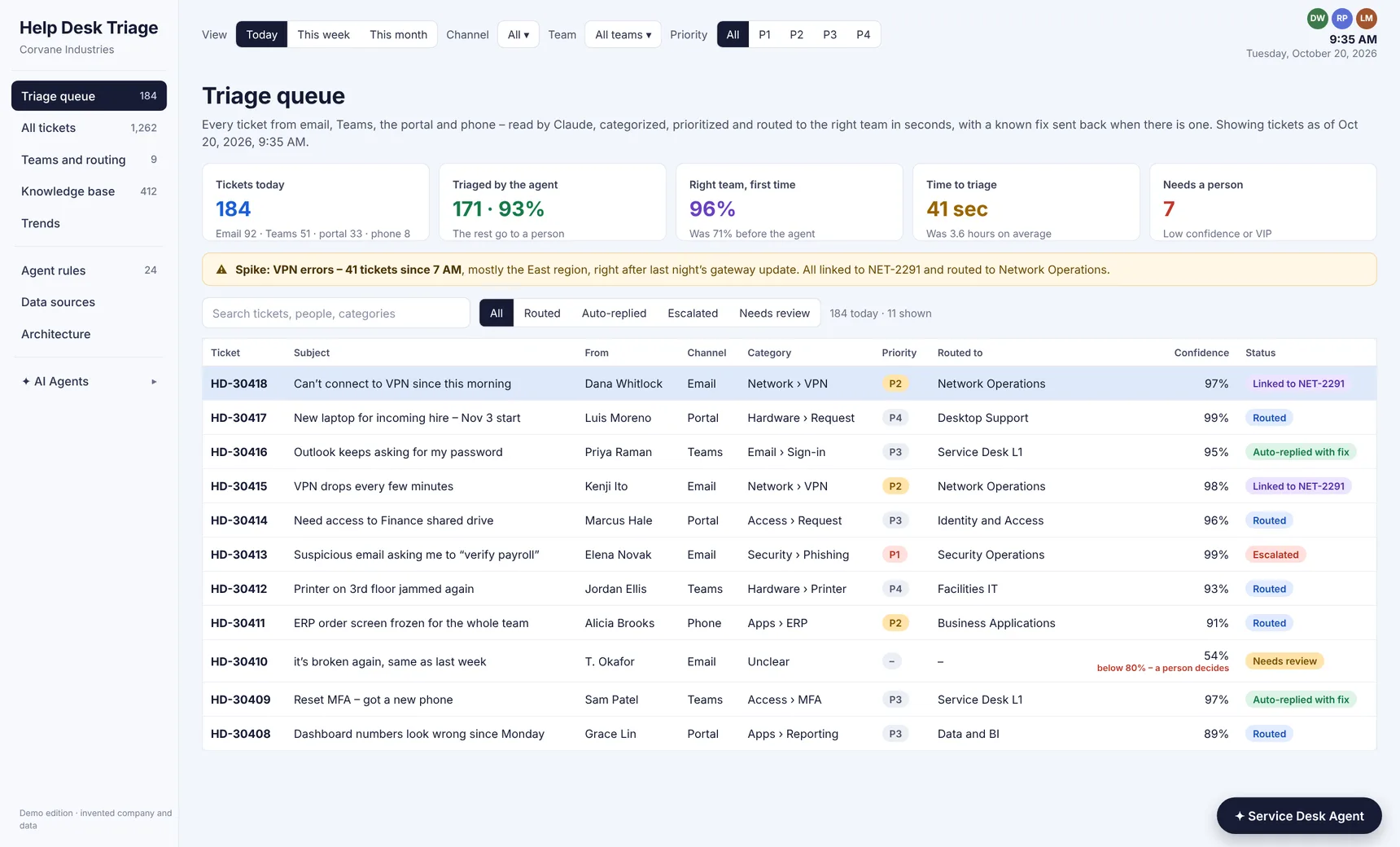
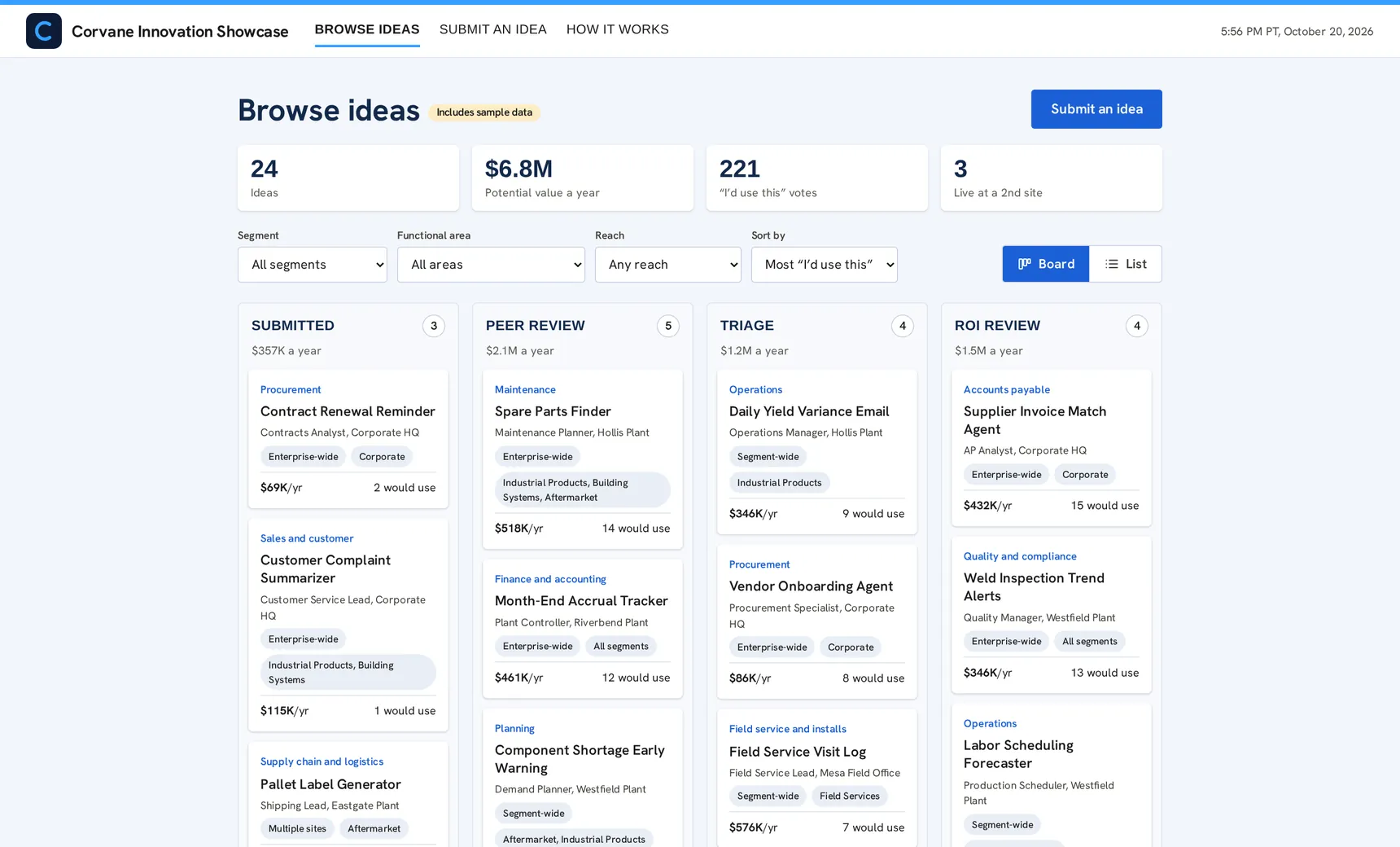
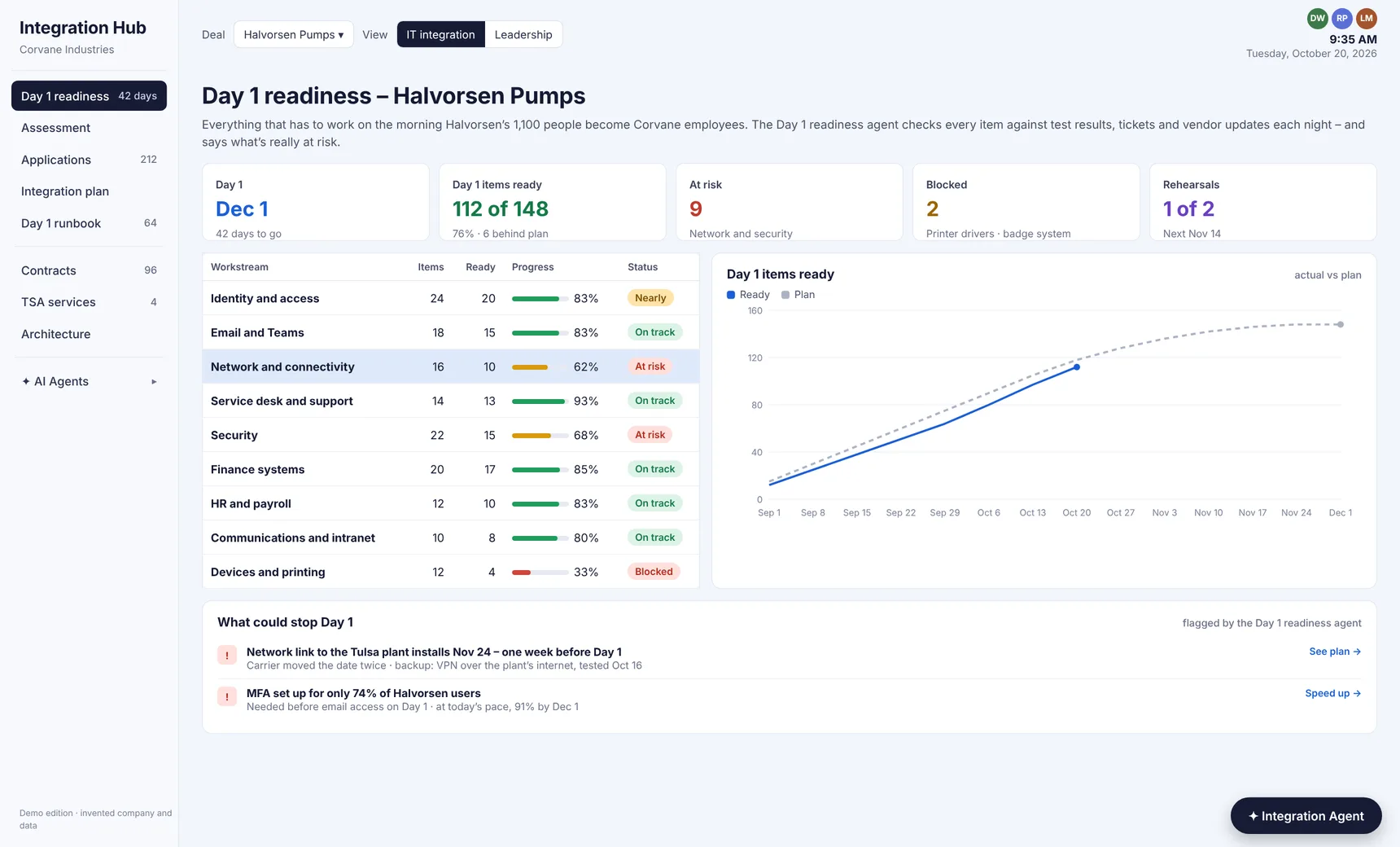
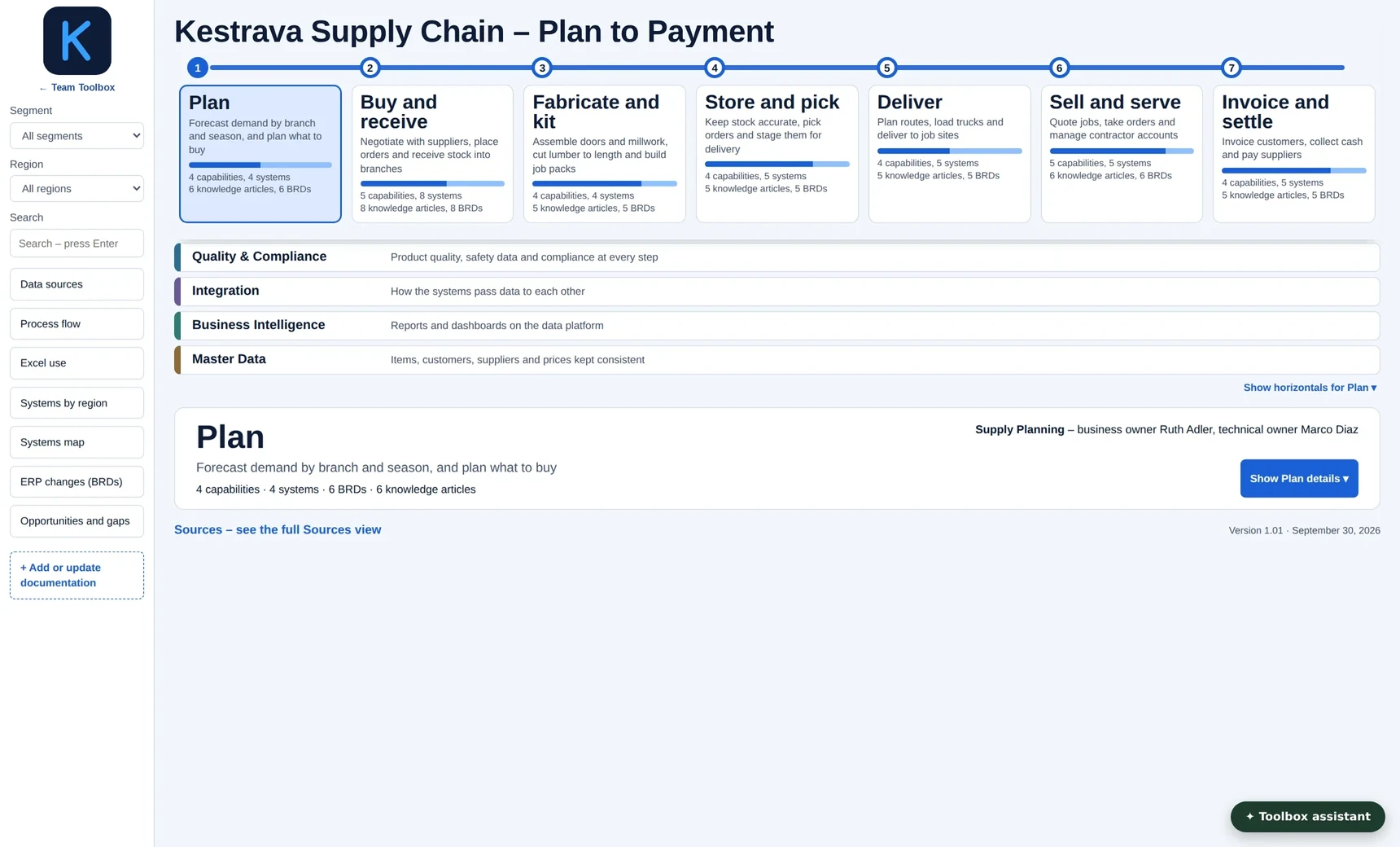
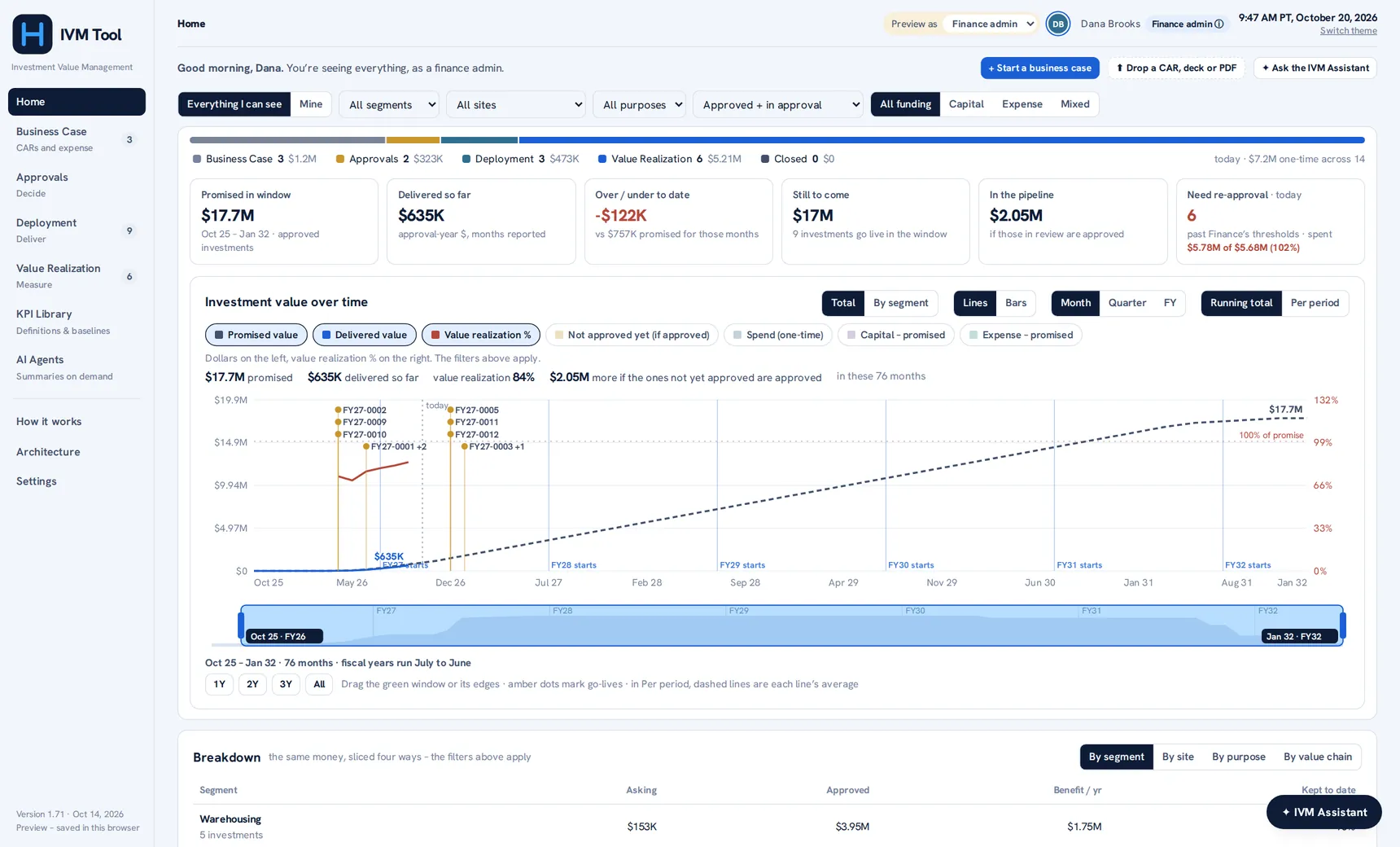
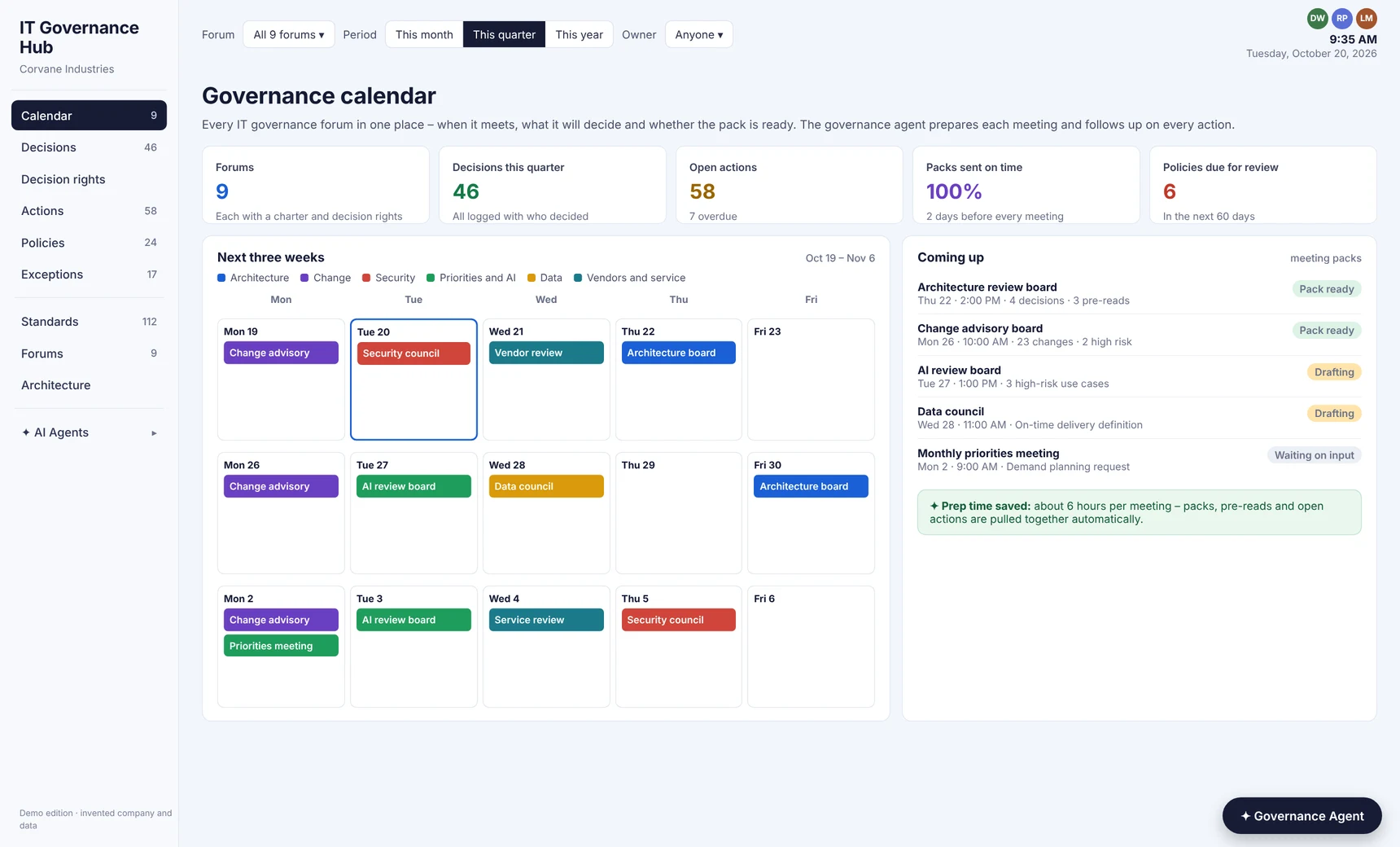
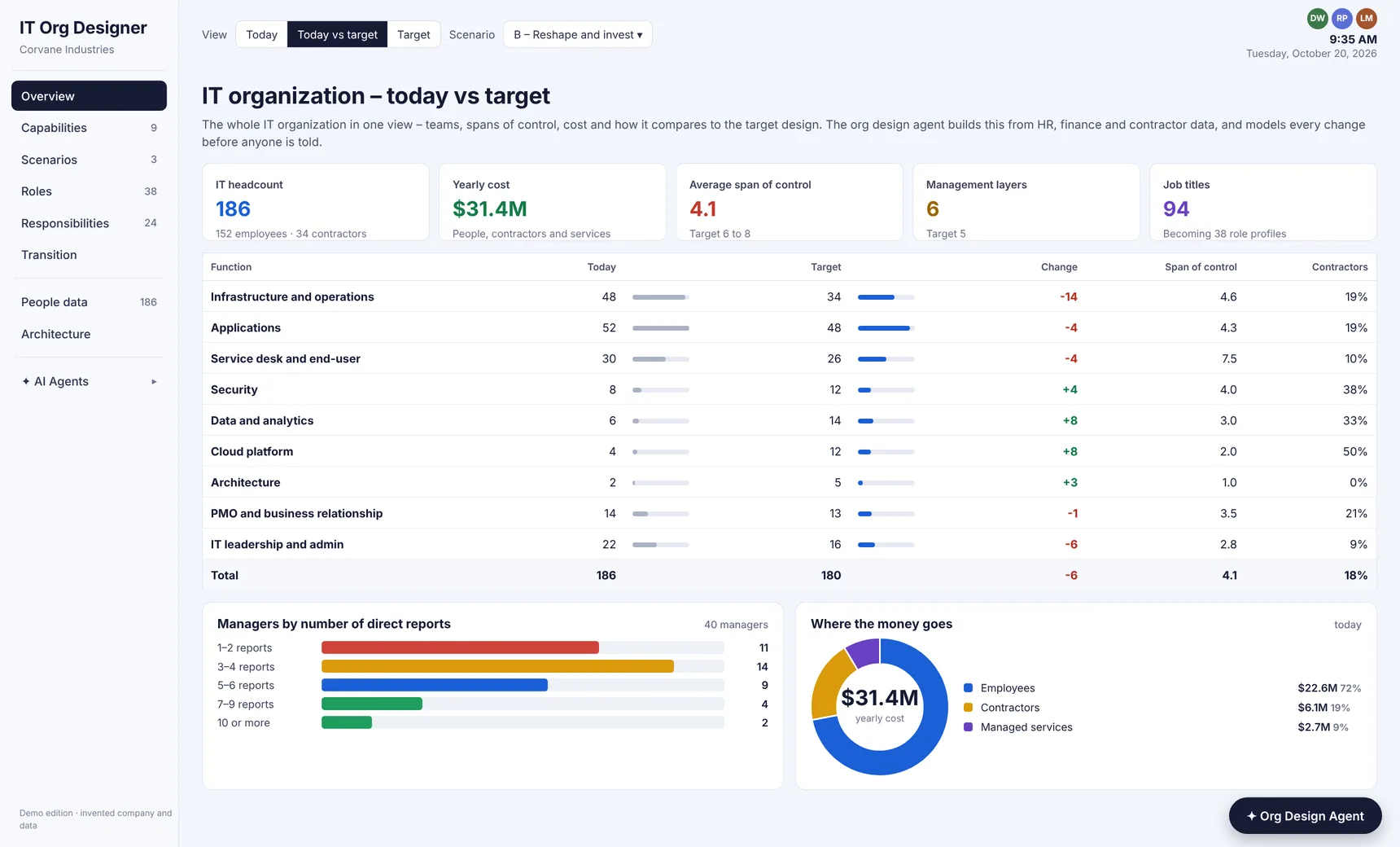
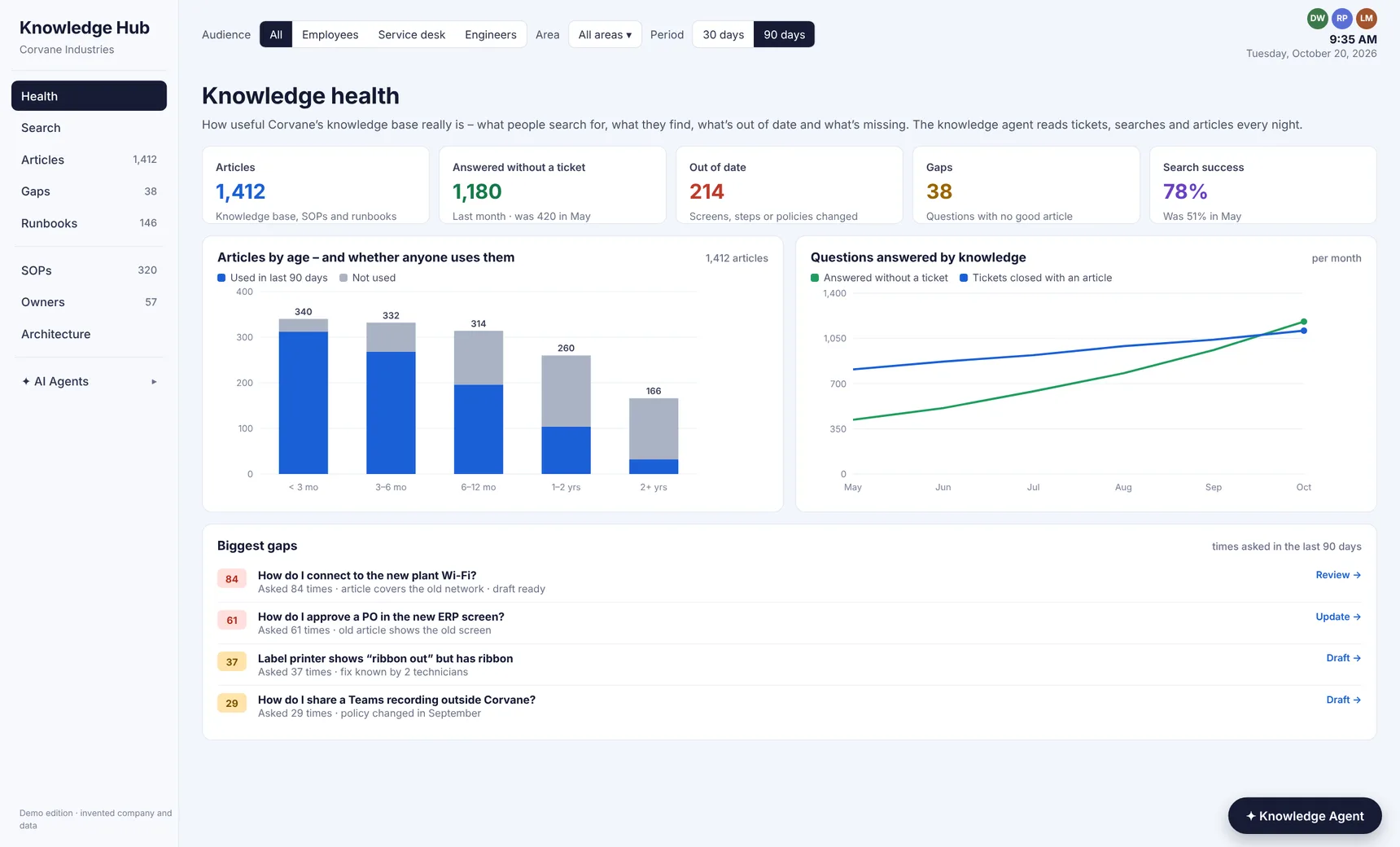
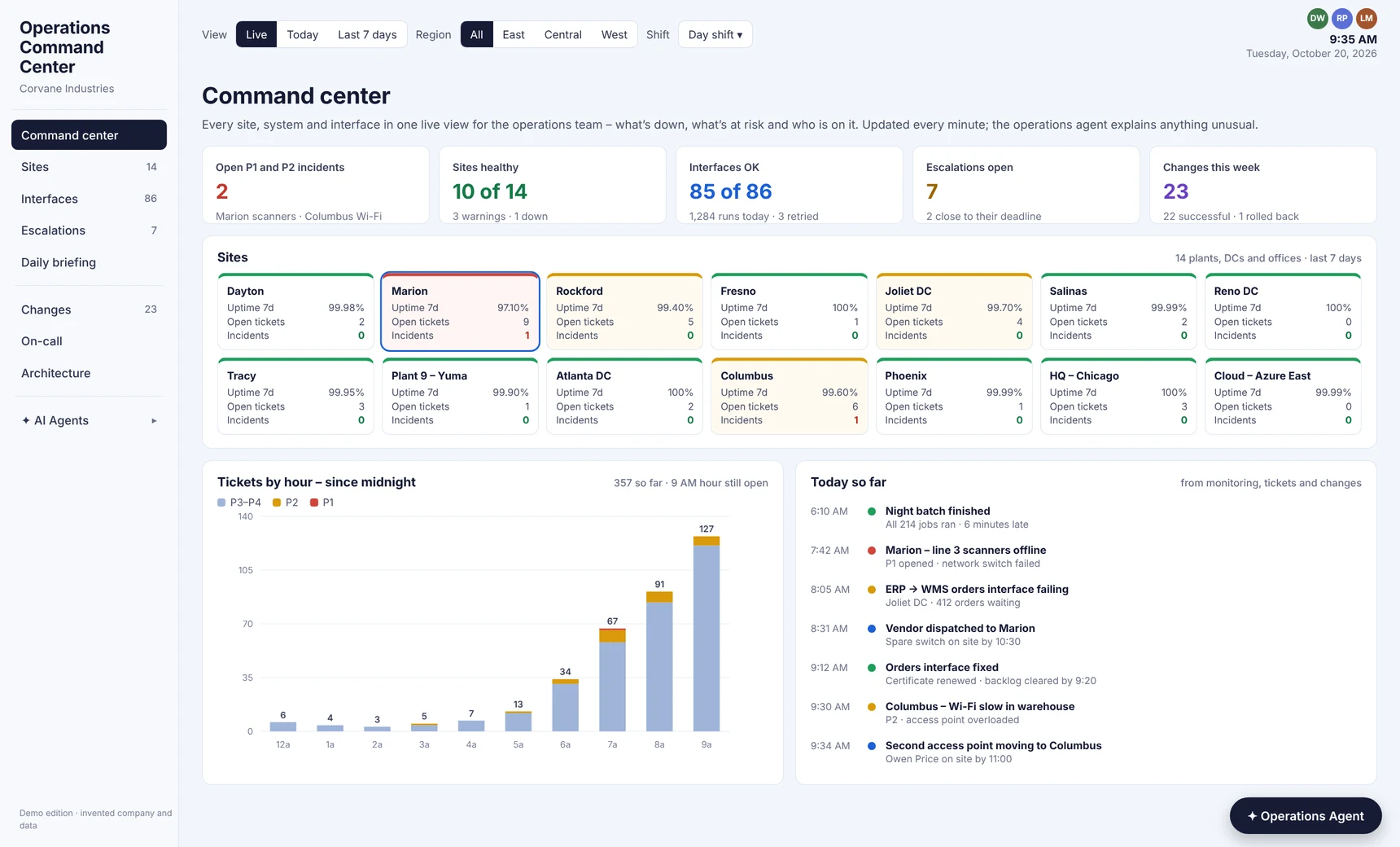
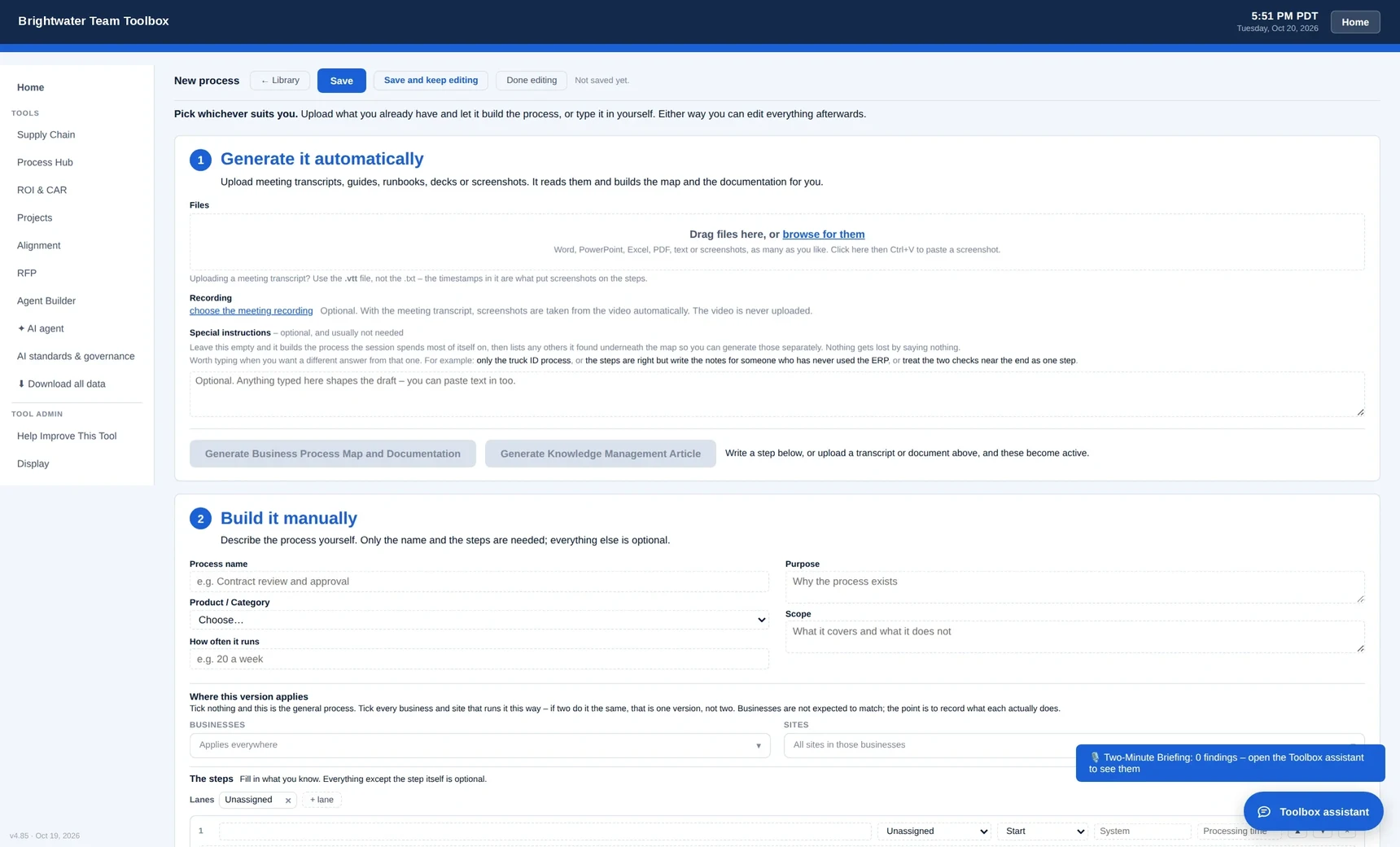
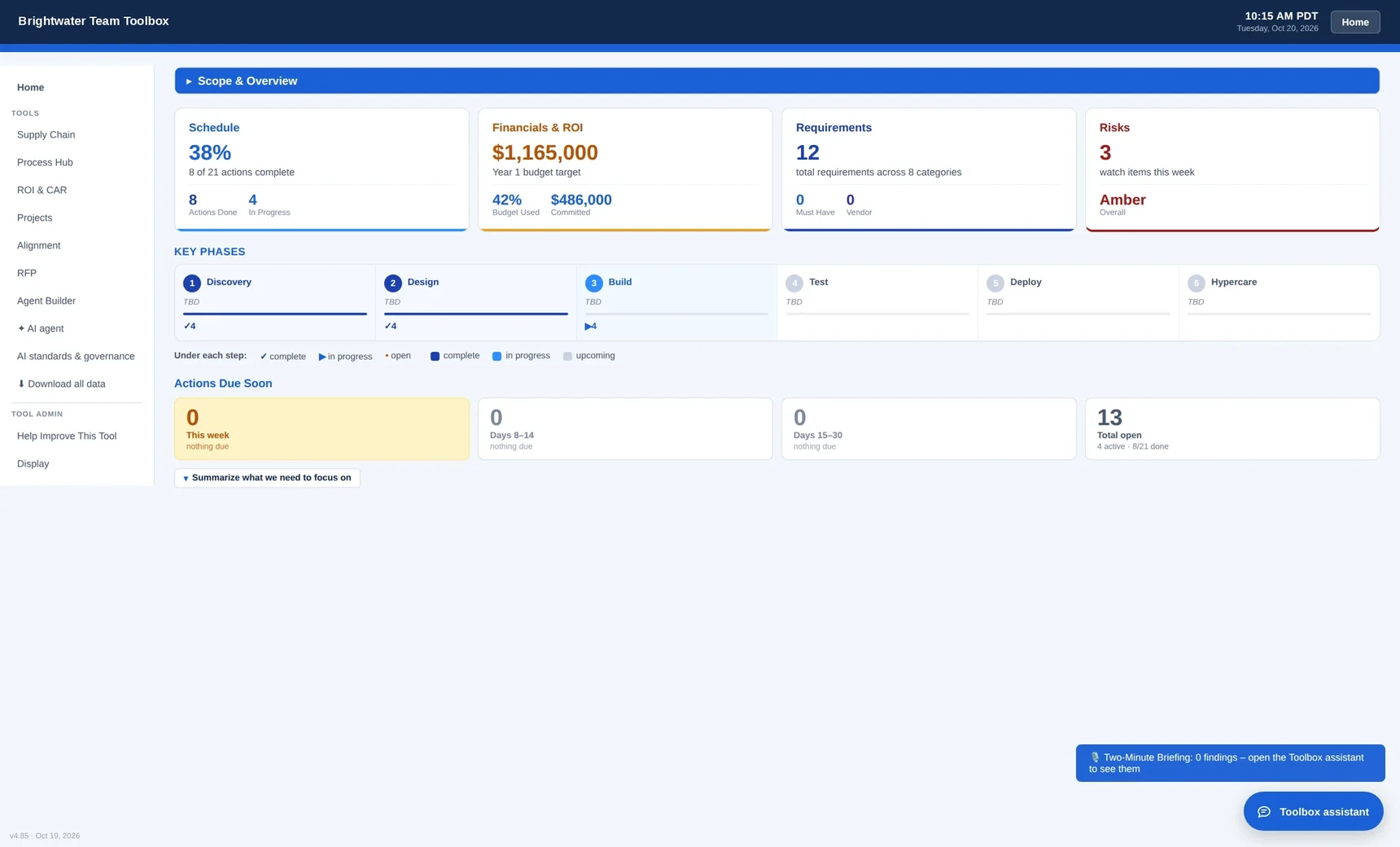
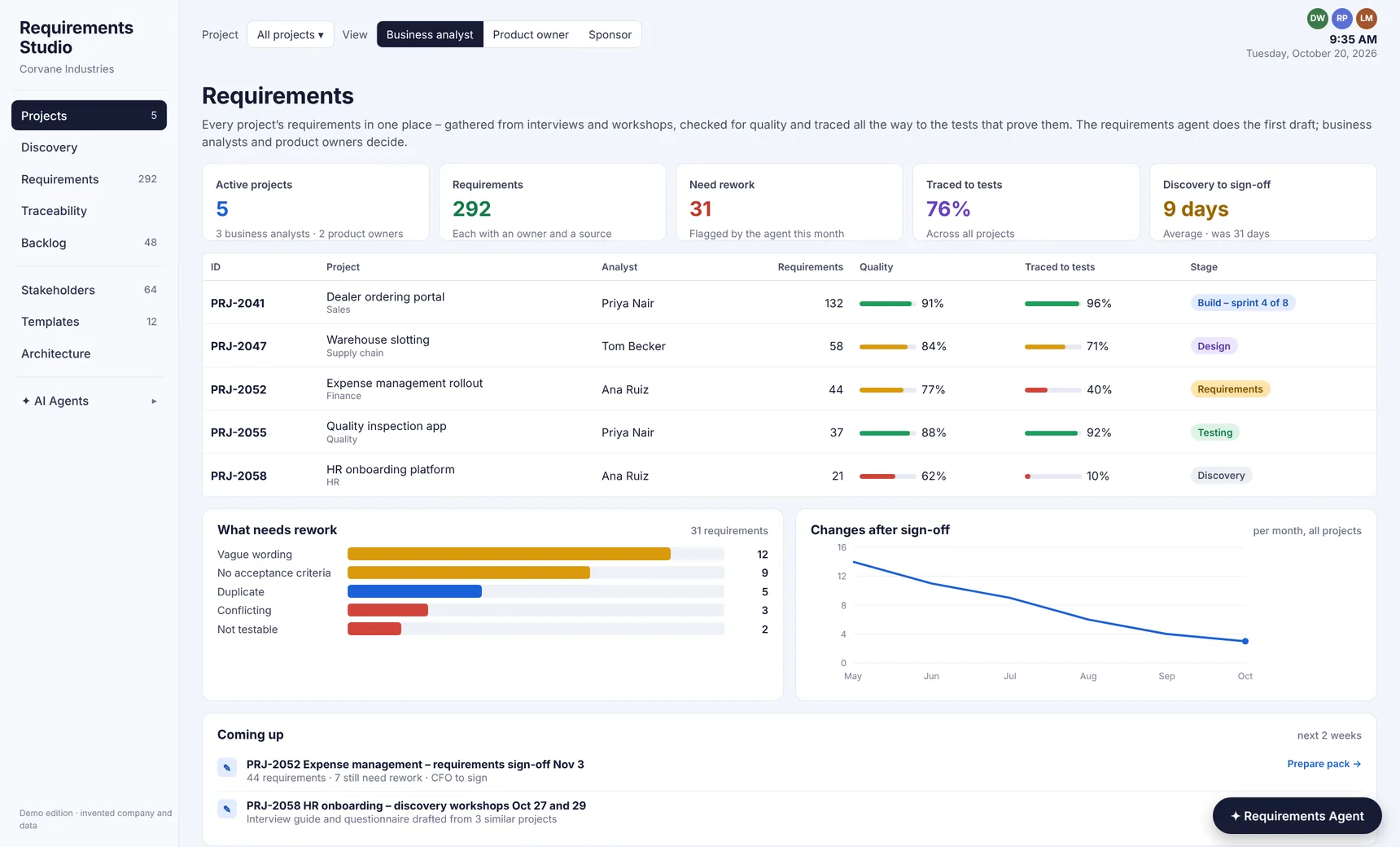
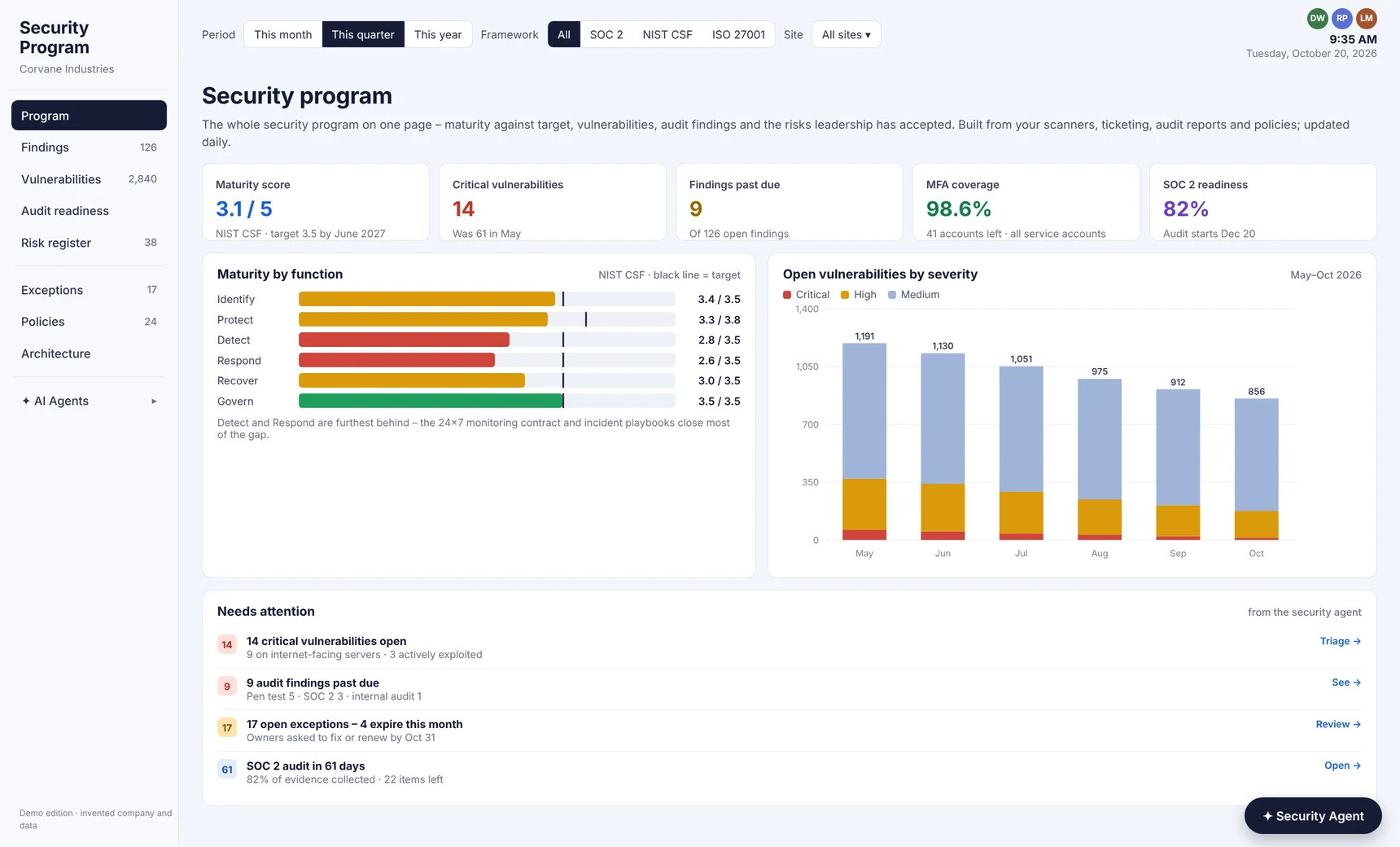
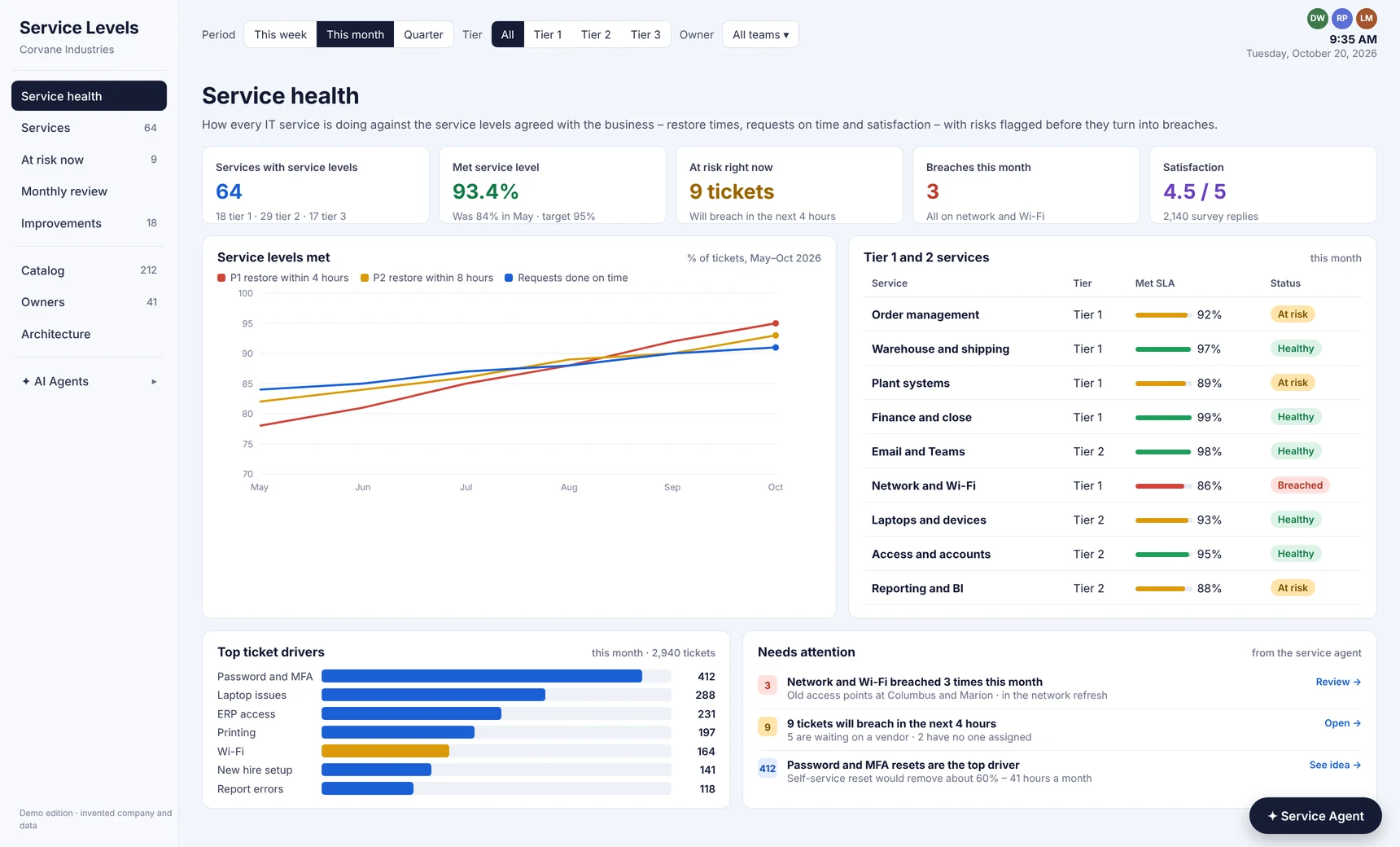
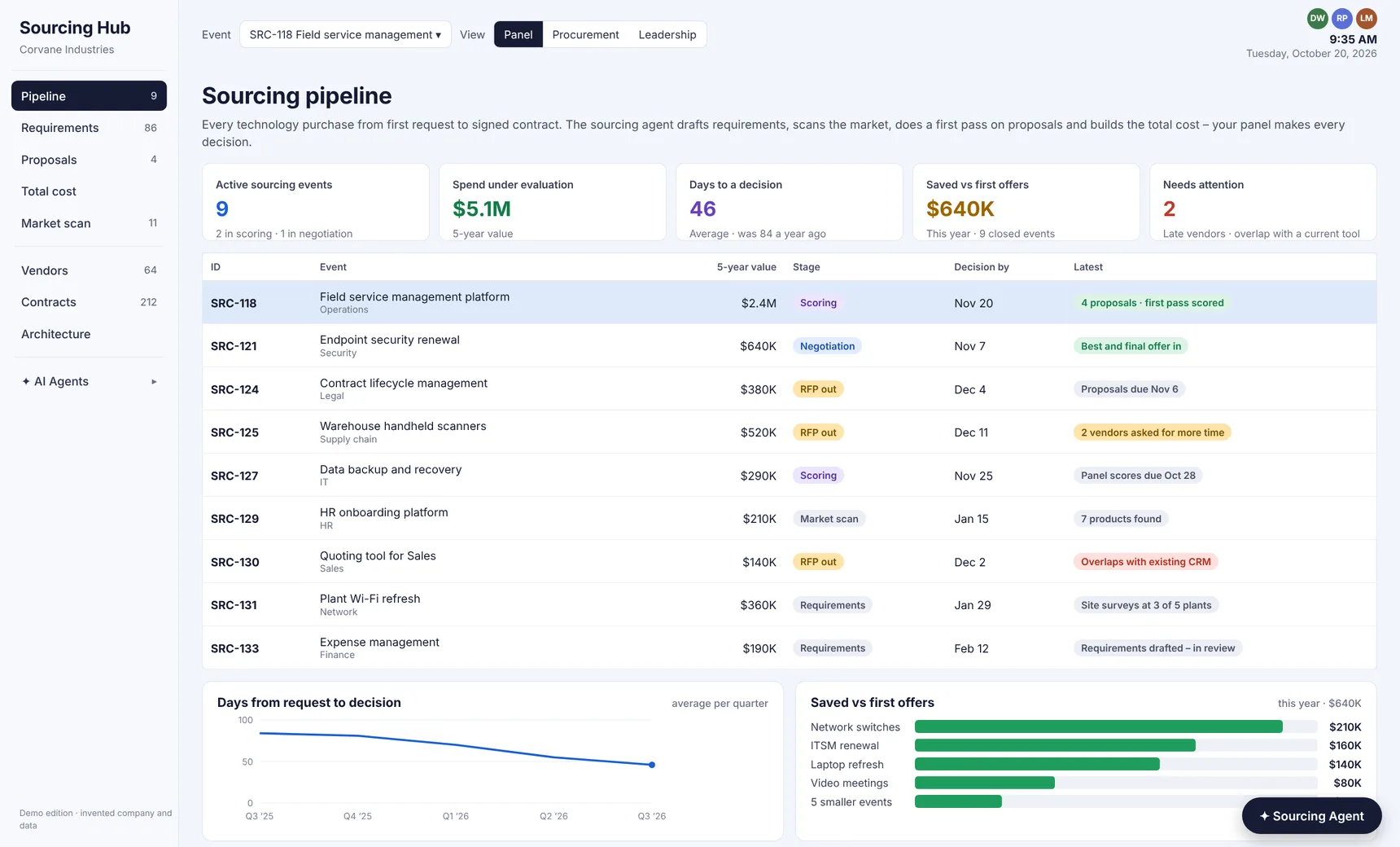
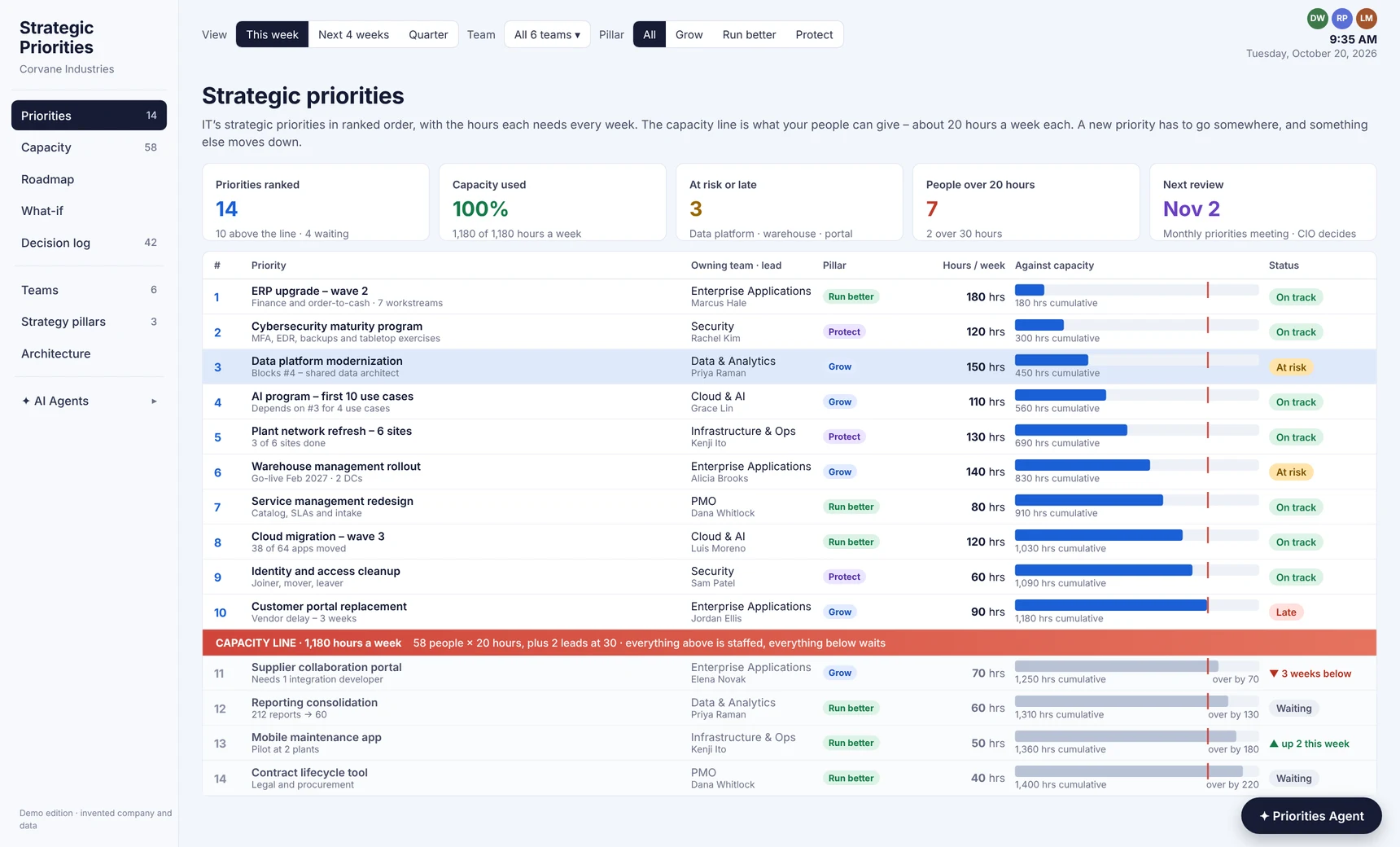
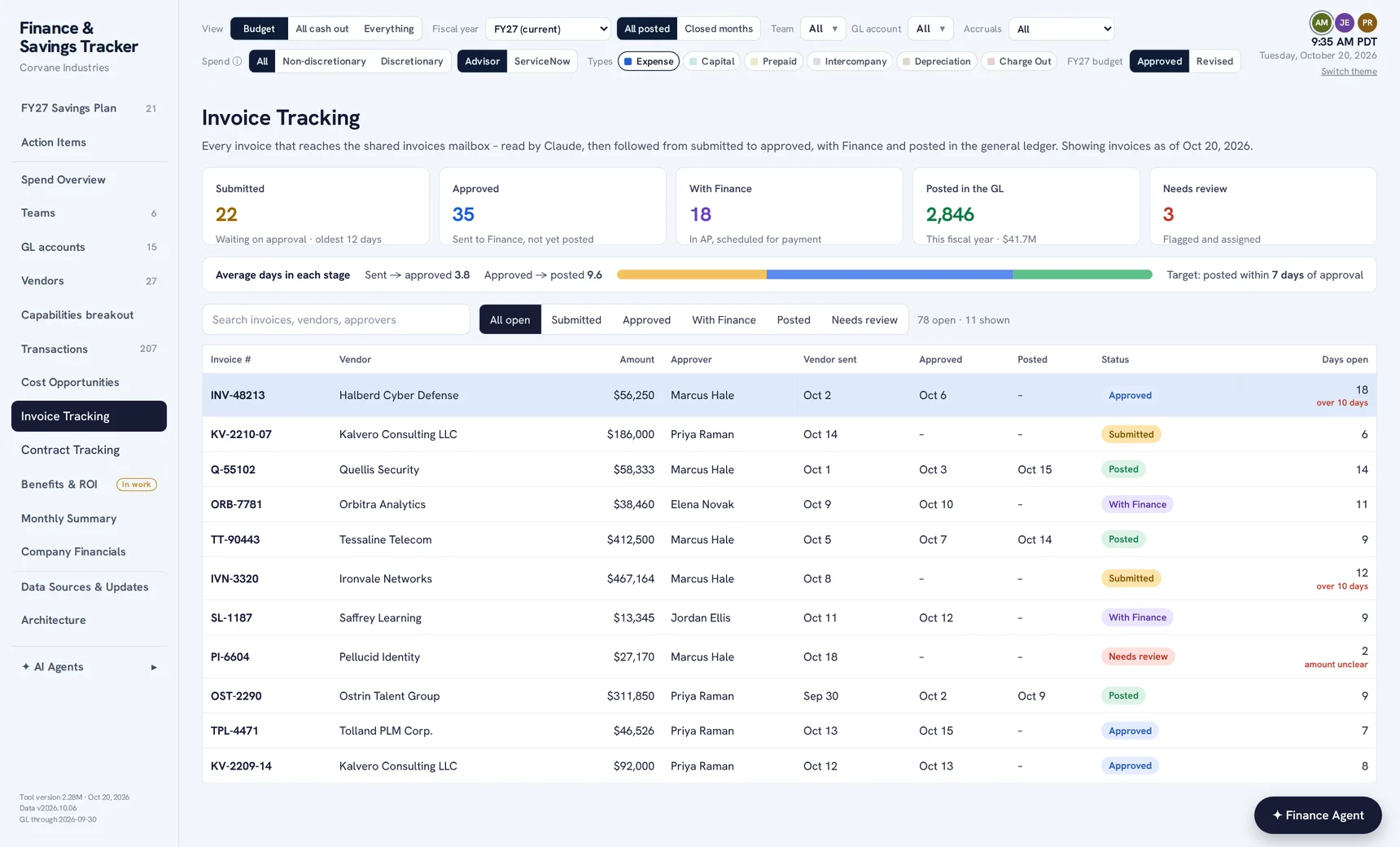
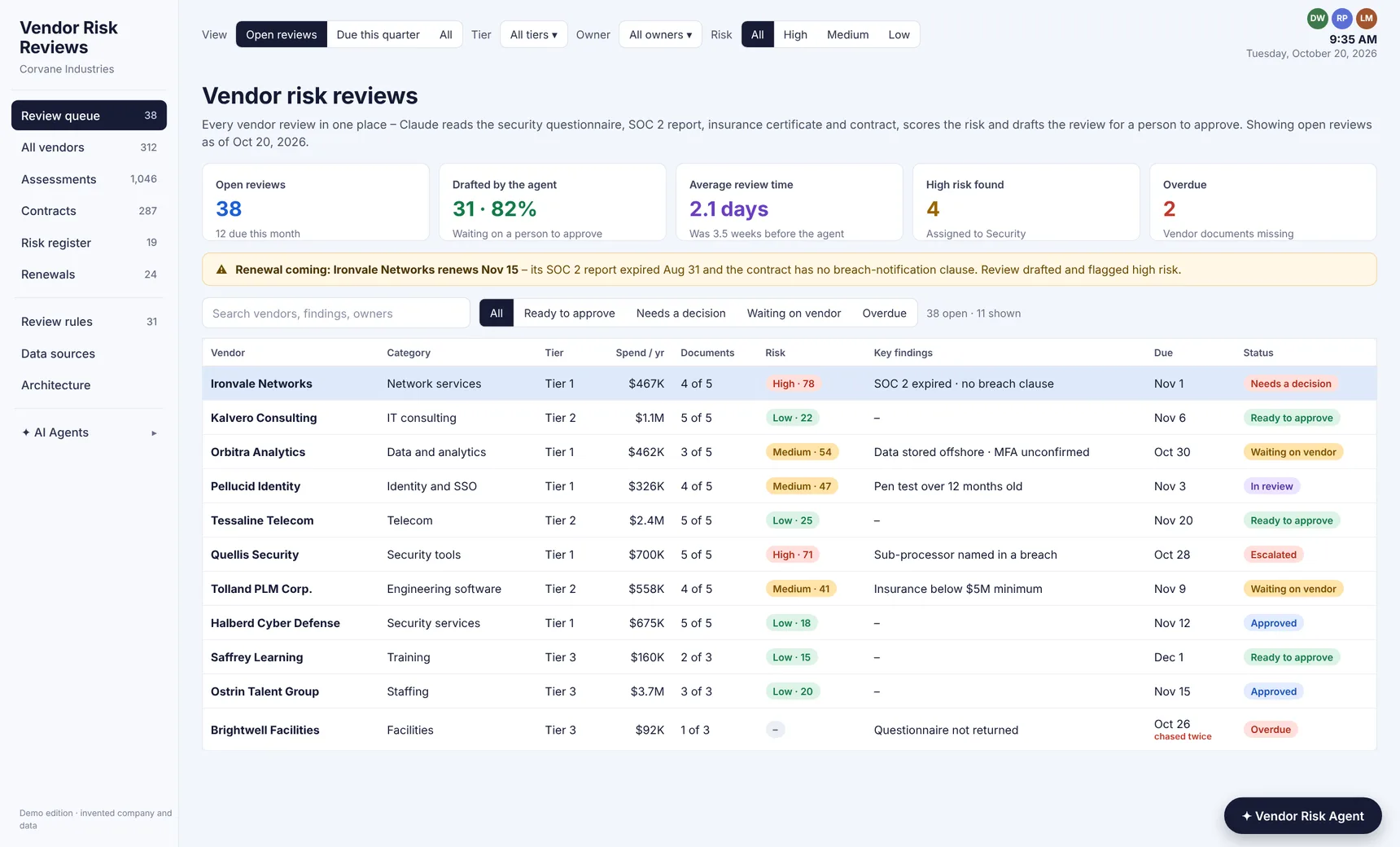
Demo companies and numbers are invented, but the interfaces and build times are real. Screenshots and videos are sanitized and shared with permission from the companies we built these tools for. We never share a client’s work without asking first.
Every tool comes with its own AI assistant
Click the assistant in the corner and just talk to it – or type. No menus to learn.
- Talk or typeSpeak to it like a colleague, or type – it’s a conversation.
- Ask it anythingAnswers come straight from the tool’s own data.
- Tell it to make updatesIt makes the change and logs it, so nothing gets lost.
- Deploy other agentsSet up agents that keep watch and report back on their own.